
SEO is alive and well. Rank on top of both traditional search engines and AI chatbots.
There’s a common assumption behind every “best SEO companies in the USA” list – that better execution wins.
Not quite right. Execution matters, but it’s rarely the deciding factor. What separates outcomes is how you handle authority, distribution, and timing. Most of the work that moves rankings doesn’t even happen on the page.
That’s where things usually go wrong, actually. Businesses hire based on deliverables – content, audits, reports. But SEO doesn’t respond to activity. It responds to accumulated trust, and that takes longer than most are prepared for. Which is why selection matters more than tactics.
We analyzed 100+ agencies using data from Clutch, DesignRush, Glassdoor, LinkedIn, and SEMrush. Same evaluation structure throughout project costs, traffic signals, client feedback, review volume, team strength, and experience.
This isn’t about who looks good on paper. It’s about who can hold performance once the easy wins are gone.
These agencies lead the SEO industry with proven strategies, client satisfaction, and measurable results.
| Rank | Agency Name | Website | Web Visits (Monthly) | LinkedIn Members | Experience (Years) | Client Rating (5) | Client Reviews | Employee Rating (5) | Employee Reviews | Hourly Rate (USD) | Min Project (USD) | Final Score (100) |
|---|---|---|---|---|---|---|---|---|---|---|---|---|
| 1 | WebFX | webfx.com | 820300 | 1171 | 30 | 4.9 | 644 | 4.4 | 438 | 100 | 1000 | 85 |
| 2 | On The Map Marketing | onthemap.com | 21300 | 93 | 15 | 4.2 | 1663 | 3.7 | 81 | 100 | 1000 | 62 |
| 3 | SmartSites | smartsites.com | 66100 | 294 | 14 | 4.9 | 1119 | 4.6 | 105 | 100 | 1000 | 58 |
| 4 | Boostability | boostability.com | 26400 | 320 | 16 | 4.7 | 222 | 3.5 | 500 | 50 | 1000 | 55 |
| 5 | Disruptive Advertising | disruptiveadvertising.com | 35100 | 134 | 14 | 4.8 | 664 | 4.1 | 269 | 100 | 5000 | 53 |
| 6 | Brafton | brafton.com | 72400 | 158 | 17 | 4.9 | 41 | 3.8 | 367 | 150 | 5000 | 44 |
| 7 | Thrive | thriveagency.com | 176800 | 206 | 20 | 4.6 | 166 | 2.9 | 203 | 100 | 1000 | 43 |
| 8 | Straight North | straightnorth.com | 11800 | 102 | 28 | 4.7 | 169 | 4.3 | 111 | 100 | 1000 | 42 |
| 9 | Intero Digital | interodigital.com | 21700 | 276 | 29 | 4.9 | 176 | 3.4 | 62 | 100 | 1000 | 40 |
| 10 | Coalition Technologies | coalitiontechnologies.com | 119200 | 301 | 16 | 4.8 | 188 | 2.3 | 121 | 50 | 1000 | 39 |
| 11 | OuterBox | outerboxdesign.com | 40600 | 322 | 21 | 5 | 62 | 3.7 | 139 | 150 | 1000 | 38 |
| 12 | Funnel Boost Media | funnelboostmedia.net | 7700 | 46 | 13 | 4.9 | 237 | 4.6 | 11 | 50 | 1000 | 37 |
| 13 | Ignite Visibility | ignitevisibility.com | 63900 | 282 | 13 | 4.8 | 208 | 3.7 | 86 | 100 | 5000 | 36 |
| 14 | Lounge Lizard | loungelizard.com | 30300 | 53 | 27 | 4.8 | 139 | 4.2 | 32 | 100 | 10000 | 36 |
| 15 | Jives Media | jivesmedia.com | 14100 | 50 | 13 | 5 | 399 | 2.5 | 4 | 100 | 1000 | 34 |
| 16 | Searchbloom | searchbloom.com | 13500 | 32 | 11 | 4.9 | 173 | 4.7 | 54 | 100 | 5000 | 34 |
| 17 | OpenMoves | openmoves.com | 3100 | 38 | 25 | 5 | 206 | 2.4 | 8 | 100 | 1000 | 34 |
| 18 | SeoProfy | seoprofy.com | 13400 | 85 | 13 | 5 | 89 | 4.5 | 5 | 50 | 1000 | 34 |
| 19 | Siege Media | siegemedia.com | 39200 | 108 | 13 | 4.9 | 55 | 3.9 | 82 | 100 | 5000 | 33 |
| 20 | EWR Digital | ewrdigital.com | 6700 | 40 | 26 | 5 | 51 | 4.3 | 8 | 150 | 5000 | 33 |
| 21 | Rankings.io | rankings.io | 29200 | 129 | 12 | 4.9 | 148 | 4.8 | 27 | 150 | 5000 | 32 |
| 22 | Neon Ambition | neonambition.com | 400 | 16 | 12 | 4.9 | 107 | 4.4 | 22 | 100 | 1000 | 32 |
| 23 | Fannit | fannit.com | 2900 | 31 | 15 | 4.8 | 16 | 4.9 | 17 | 100 | 1000 | 32 |
| 24 | Sure Oak | sureoak.com | 17700 | 45 | 8 | 4.8 | 113 | 5 | 16 | 100 | 1000 | 32 |
| 25 | Elephate | elephate.com | 1500 | 13 | 14 | 5 | 15 | 5 | 2 | 100 | 1000 | 32 |
| 26 | Black Propeller | blackpropeller.com | 4800 | 41 | 13 | 4.8 | 91 | 4.5 | 13 | 100 | 1000 | 32 |
| 27 | SEO Brand | seobrand.com | 5500 | 98 | 20 | 4.9 | 111 | 2.2 | 25 | 100 | 1000 | 31 |
| 28 | Firestarter SEO | firestarterseo.com | 3000 | 8 | 16 | 4.9 | 86 | 4.5 | 4 | 150 | 1000 | 31 |
| 29 | High Voltage SEO | hvseo.co | 5200 | 29 | 11 | 4.9 | 31 | 4.8 | 3 | 100 | 1000 | 30 |
| 30 | HawkSEM | hawksem.com | 56600 | 86 | 19 | 4.9 | 43 | 1.9 | 43 | 100 | 1000 | 30 |
| 31 | Silverback Strategies | silverbackstrategies.com | 2900 | 44 | 18 | 4.8 | 27 | 3.4 | 80 | 150 | 5000 | 30 |
| 32 | Eclipse Marketing | eclipsemarketing.io | 8700 | 7 | 6 | 5 | 18 | 3.8 | 110 | 150 | 1000 | 29 |
| 33 | Outpace | outpaceseo.com | 4900 | 26 | 12 | 5 | 59 | 2.4 | 70 | 100 | 1000 | 29 |
| 34 | Dragonfly Digital Marketing | dragonflydm.com | 1600 | 7 | 18 | 5 | 32 | 2.4 | 30 | 100 | 1000 | 29 |
| 35 | Loopex Digital | loopexdigital.com | 13500 | 56 | 7 | 5 | 66 | 2.5 | 1 | 25 | 1000 | 28 |
| 36 | Pure Visibility | purevisibility.com | 2100 | 13 | 20 | 4.9 | 10 | 5 | 4 | 200 | 10000 | 28 |
| 37 | NuStream | nustreammarketing.com | 900 | 15 | 15 | 5 | 103 | 2 | 1 | 100 | 1000 | 28 |
| 38 | JSL Marketing | jsl.marketing | 1300 | 19 | 11 | 5 | 109 | 2.5 | 1 | 100 | 5000 | 27 |
| 39 | Volume Nine | v9digital.com | 3500 | 23 | 19 | 5 | 30 | 1.8 | 30 | 150 | 1000 | 27 |
| 40 | RivalMind | rivalmind.com | 6000 | 19 | 15 | 5 | 43 | 2.4 | 4 | 150 | 1000 | 26 |
| 41 | NextLeft | nextleft.com | 2500 | 19 | 10 | 4.9 | 28 | 2.5 | 11 | 100 | 1000 | 26 |
| 42 | Avenue Z | avenuez.com | 50600 | 119 | 18 | 4.6 | 16 | 2.2 | 8 | 150 | 5000 | 25 |
| 43 | Stellar SEO | stellarseo.com | 2600 | 13 | 13 | 5 | 38 | 2.3 | 6 | 100 | 10000 | 25 |
| 44 | 180 Marketing | 180marketing.com | 3900 | 59 | 12 | 4.8 | 44 | 1.7 | 8 | 100 | 1000 | 24 |
| 45 | Plan Left | planleft.com | 1200 | 12 | 13 | 5 | 6 | 2.5 | 3 | 150 | 1000 | 24 |
| 46 | SimpleTiger | simpletiger.com | 5400 | 17 | 19 | 4.9 | 31 | 2.5 | 6 | 200 | 5000 | 24 |
| 47 | M16 Marketing | m16marketing.com | 1600 | 11 | 12 | 5 | 159 | 2 | 1 | 150 | 10000 | 24 |
| 48 | Acadia | acadia.io | 6700 | 395 | 4 | 4.8 | 54 | 2.1 | 21 | 100 | 5000 | 24 |
| 49 | Victorious | victorious.com | 33300 | 100 | 12 | 4.8 | 123 | 3.1 | 52 | 300 | 5000 | 24 |
| 50 | 3 Media Web | 3mediaweb.com | 2500 | 42 | 24 | 4.9 | 72 | 2.5 | 27 | 50 | 50000 | 24 |
No agencies found matching your search criteria
On paper, many agencies look similar. Same services, similar claims, comparable ratings. But once execution starts, the gaps show up – in how they prioritize work, how they handle link acquisition, how they deal with slow months when nothing obvious is moving.
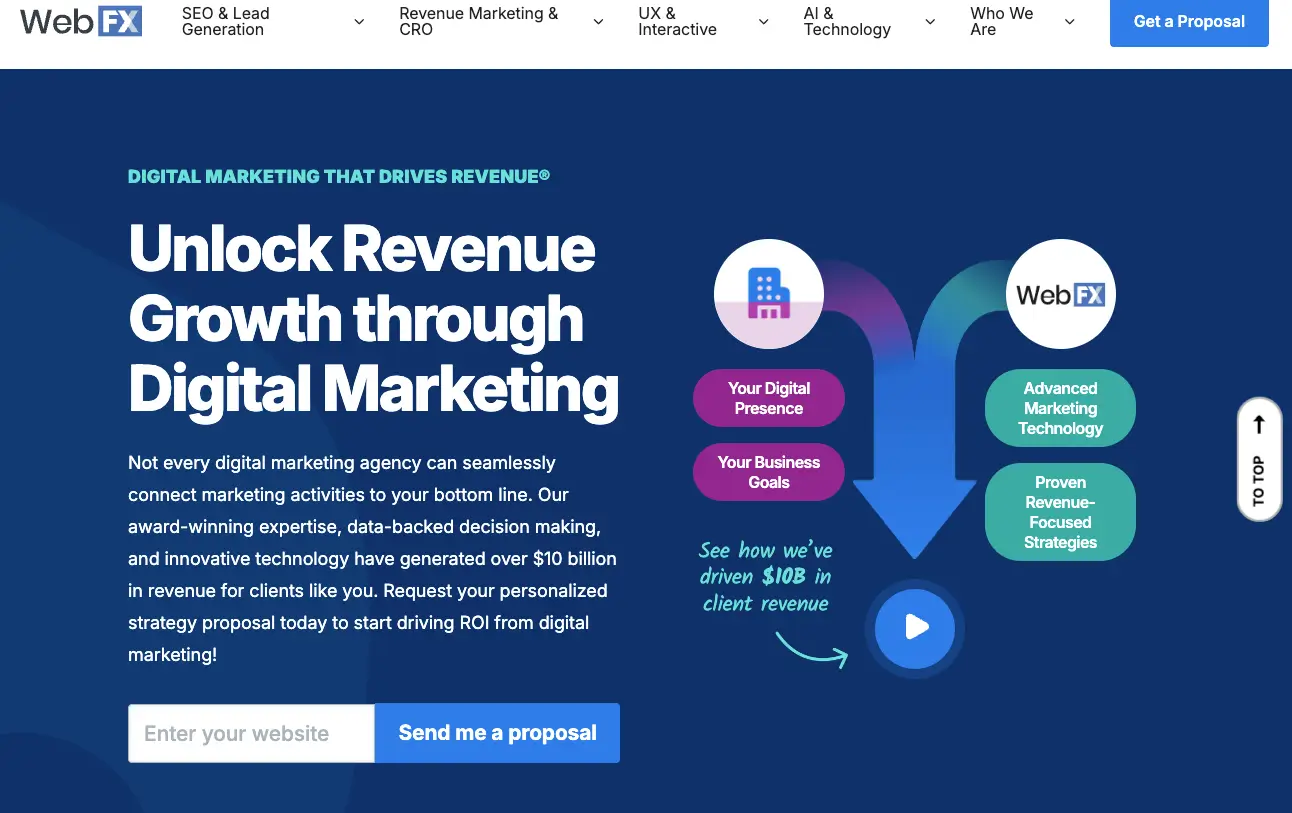
WebFX is what happens when SEO stops being a service and turns into a system.
They’re based in Harrisburg, but that’s almost irrelevant at this scale. With multiple US offices and hundreds of specialists, they operate more like an internal growth department for companies that already have traction.
What stands out early is that they don’t talk about rankings much. Everything points back to revenue. Their platform (RevenueCloudFX) is built around that idea: track the path from traffic to pipeline, not just clicks.
That sounds obvious. Most agencies say it. Few actually wire their execution around it.
Here’s where things get real. When teams get this large, the work splits. Strategy sits in one layer. Execution moves through others. And this is where clients usually feel the difference – not in capability, but in consistency.
Some accounts run like clockwork. Others slow down when ownership shifts. It’s a pattern you see with scaled agencies.
They’ve also leaned hard into where search is heading. AI visibility, multi-platform discovery, not just Google rankings. That’s more relevant in US enterprise markets than people think, especially now that search behavior is fragmenting.
This isn’t a lean, hands-on shop. It’s structured. Process-heavy. Works best when the client side is equally organized.
Core Services:
WebFX is a search-first agency. SEO is the centerpiece of their strategy, supported by complementary services:
Why They Rank #1:
Most clients point to strong communication and structured delivery. Results show up in traffic and lead growth. That said, a few mention changes in account managers disrupting continuity – something that tends to surface more in larger teams.
WebFX works best for companies that already have systems in place. Enterprise, multi-location, or teams that need reporting tied to revenue. If you’re smaller or need flexibility, this setup can feel heavy. Compared to boutique agencies, this is more process-driven than relationship-led, and that trade-off matters.
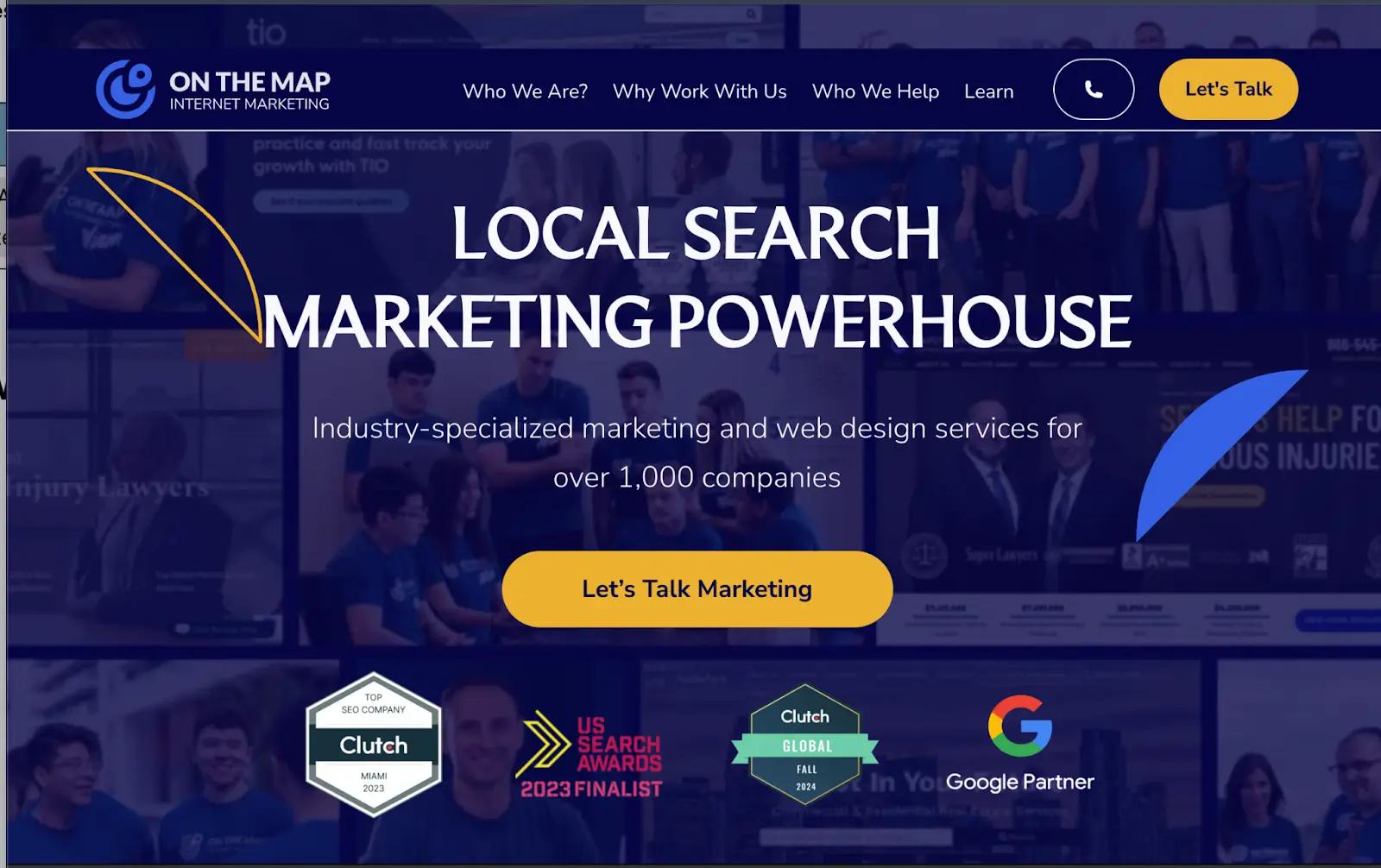
On The Map Marketing is in Miami, but their work feels very tied to specific US industries rather than broad SEO.
You can see it quickly. Law firms. home services. medical practices. These aren’t casual niches. They’re aggressive, local-first, and heavily driven by lead quality, not just traffic.
That changes how SEO is handled. In legal, for example, ranking isn’t the hard part long-term. Staying there is. Competitors push constantly, and link signals decay faster than people expect. Their case studies – especially in personal injury – point to that kind of environment.
There’s also a strong local layer here. Miami itself is a competitive testing ground. Multi-language audiences, dense competition, high-value leads. Agencies that survive there usually understand local search pressure better than most.
Their structure feels more focused than large agencies. Smaller teams, tighter communication loops. That helps when execution needs to move without delays, which is often where SEO projects slow down.
But specialization comes with trade-offs. This isn’t built for every type of business. It’s tuned for industries where one client can be worth thousands.
Core Services:
Why They Rank #2:
Clients often talk about lead quality, not just traffic. That stands out. Communication gets mentioned, especially around strategy clarity. Some highlight strong trust over time. A few note that results depend heavily on niche competitiveness, which isn’t always obvious upfront.
Best suited for law firms, contractors, and service businesses where each lead matters. They’re built for competitive local markets, not broad traffic growth. Compared to generalist agencies, this feels more focused. But outside these niches, the approach may feel too narrow.
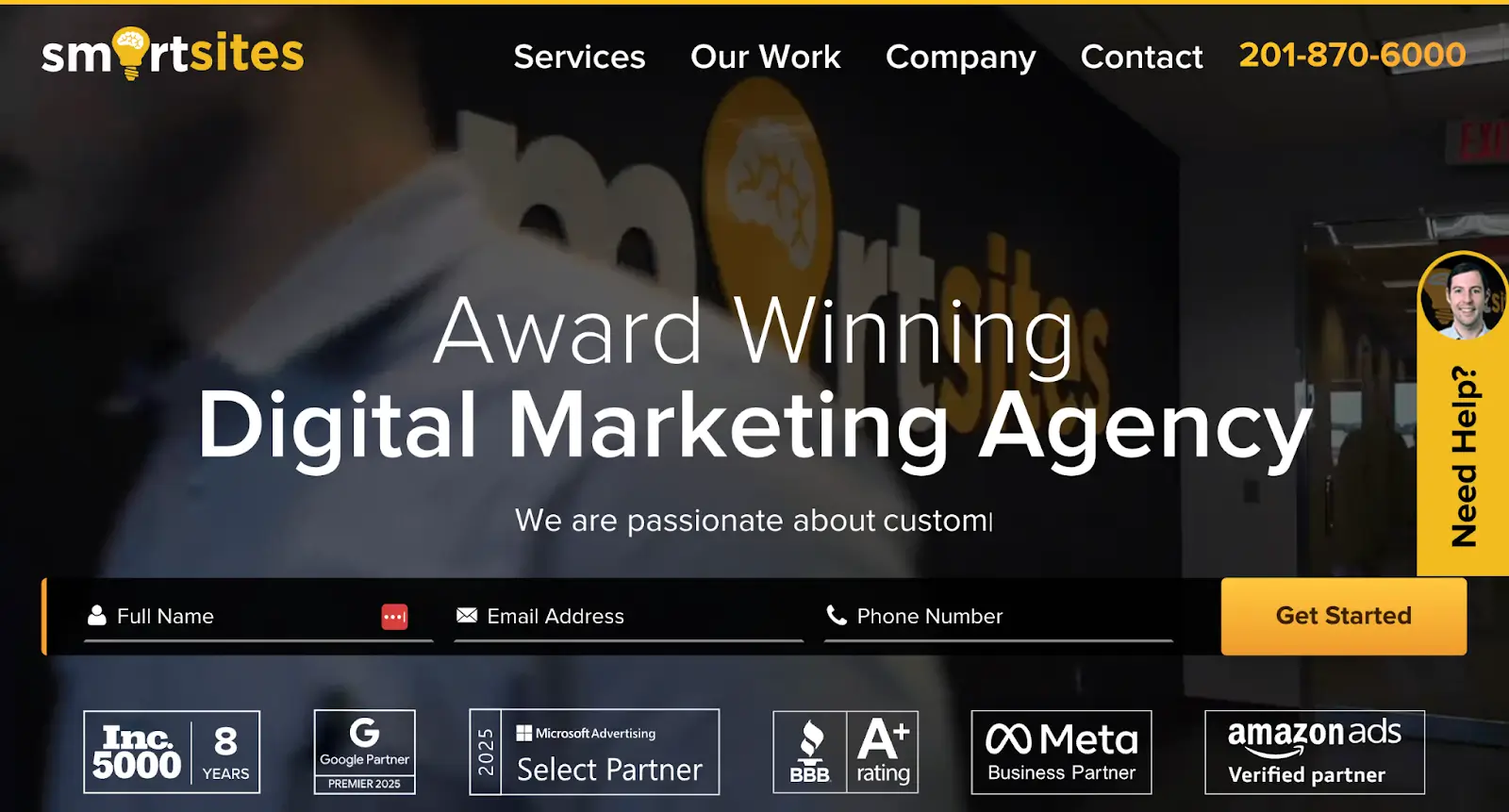
SmartSites comes out of New Jersey, but the footprint is much wider than that. Offices across major US cities – Texas, Florida, California – and a client base that leans heavily into small to mid-sized businesses trying to scale online.
You can feel the difference in how they operate.
A lot of agencies talk strategy. SmartSites tends to move faster into execution. PPC, SEO, and web – all running together early. That’s useful when clients don’t have the patience to wait six months for SEO to “kick in.”
They’ve launched over 900 websites and driven $100M+ in revenue for clients. That kind of volume usually means one thing: systems. You don’t get there by doing everything from scratch.
Here’s where it gets interesting, though. Their strength isn’t just SEO. It’s how SEO is paired with paid media. In a lot of US markets – especially ecommerce and local services – organic alone isn’t enough early on. They seem to lean into that reality instead of pretending otherwise.
At the same time, scale creates patterns. Some accounts run very smoothly. Others rely heavily on the assigned manager. You can see it in reviews – strong outcomes, but occasionally dependent on who’s handling the work.
This isn’t a niche agency. It’s built for breadth. And that works best when the goal is growth, not precision in one narrow vertical.
Core Services:
Why They Rank #3:
Clients often mention responsiveness and how quickly things move. Results show up early, especially with paid campaigns. Many highlight strong communication and organization. Some note that strategic depth can vary depending on the account team assigned.
SmartSites fits businesses that want momentum quickly. Especially ecommerce, local services, or brands combining SEO with paid growth. It’s less about deep specialization, more about execution speed. Compared to niche agencies, this feels broader – which works, if you need coverage across channels.
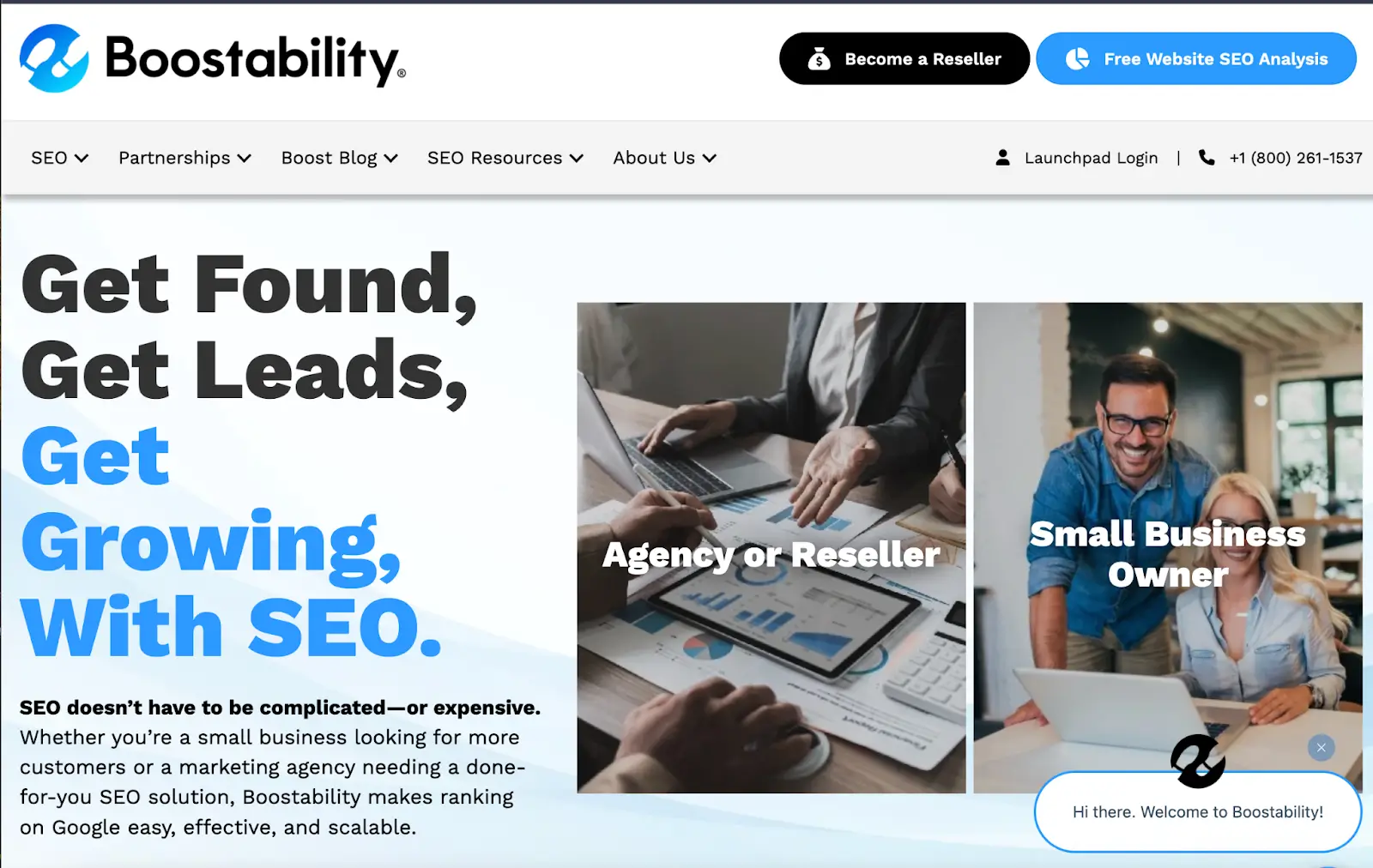
Boostability feels very different from the last two. You notice it almost immediately. They’re based in Utah, not a typical “agency hub” like New York or Miami. That matters more than people think. Lower cost base. More operational focus. Less pressure to sell high-ticket retainers.
Their entire model is built around small businesses and agencies that resell SEO. Not enterprise. Not big brand positioning. Volume.
White-label SEO is the core engine here. And that comes with a very specific way of operating – standardized delivery, predictable outputs, scalable workflows. You don’t manage thousands of SMB campaigns any other way.
They claim a large percentage of clients reach page one within six months. That’s believable in their segment. Because most of their clients aren’t competing in ultra-saturated markets. Local businesses, niche services, smaller geographic targets. Different game.
But here’s the trade-off. When you scale SEO like this, depth can flatten. Strategy becomes templated faster than most clients realize. It works – until it doesn’t.
You also see a strong push toward AI-integrated SEO frameworks. Not experimental. More like adapting existing systems to keep pace with how search is shifting.
This isn’t built for custom growth strategies. It’s built for repeatable outcomes at scale.
Core Services:
Why They Rank #4:
Clients often highlight affordability and consistent improvements in rankings. Communication is generally solid, especially for ongoing reporting. Some mention a lack of transparency around specific tactics or deliverables, which tends to surface more in long-term engagements.
Boostability works best for agencies and SMBs that need SEO done consistently, not reinvented. It’s a scale play. If you want custom strategy or deep competitive positioning, this won’t fit. But for predictable output at volume, it does exactly what it’s designed for.
A lot of brands come to Disruptive Advertising after something has already gone wrong.
The ads are running. The leads are coming in. But the numbers feel off. Too much spend. Too many weak inquiries. Too little confidence in what’s actually working. That is their lane.
From Utah, Disruptive has built a national reputation around performance marketing, especially paid search and paid social. SEO is part of the offer, but it’s not treated like a standalone trophy service. It gets pulled into the bigger question: is this marketing producing business?
Their 90-day result guarantee says a lot. They’re not trying to win every account. They’re trying to filter for brands where the math can actually move.
That can be a strength, but also a warning. If a business has messy tracking, unclear offers, or no real sales follow-up, the agency won’t magically fix the whole operation.
Core Services:
Why They Rank #5:
Clients consistently highlight strong communication, structured reporting, and real improvements in lead quality and cost efficiency. Many say the team feels like an extension of their internal marketing. Some mention occasional staff changes and mixed results at higher budget levels.
Disruptive Advertising fits companies that already spend serious money on marketing and need it to work harder. Not ideal for early-stage businesses. Strong for PPC-heavy growth models where efficiency matters. If your funnel is broken, they’ll find it. If it’s not fixable, they probably won’t take you on.
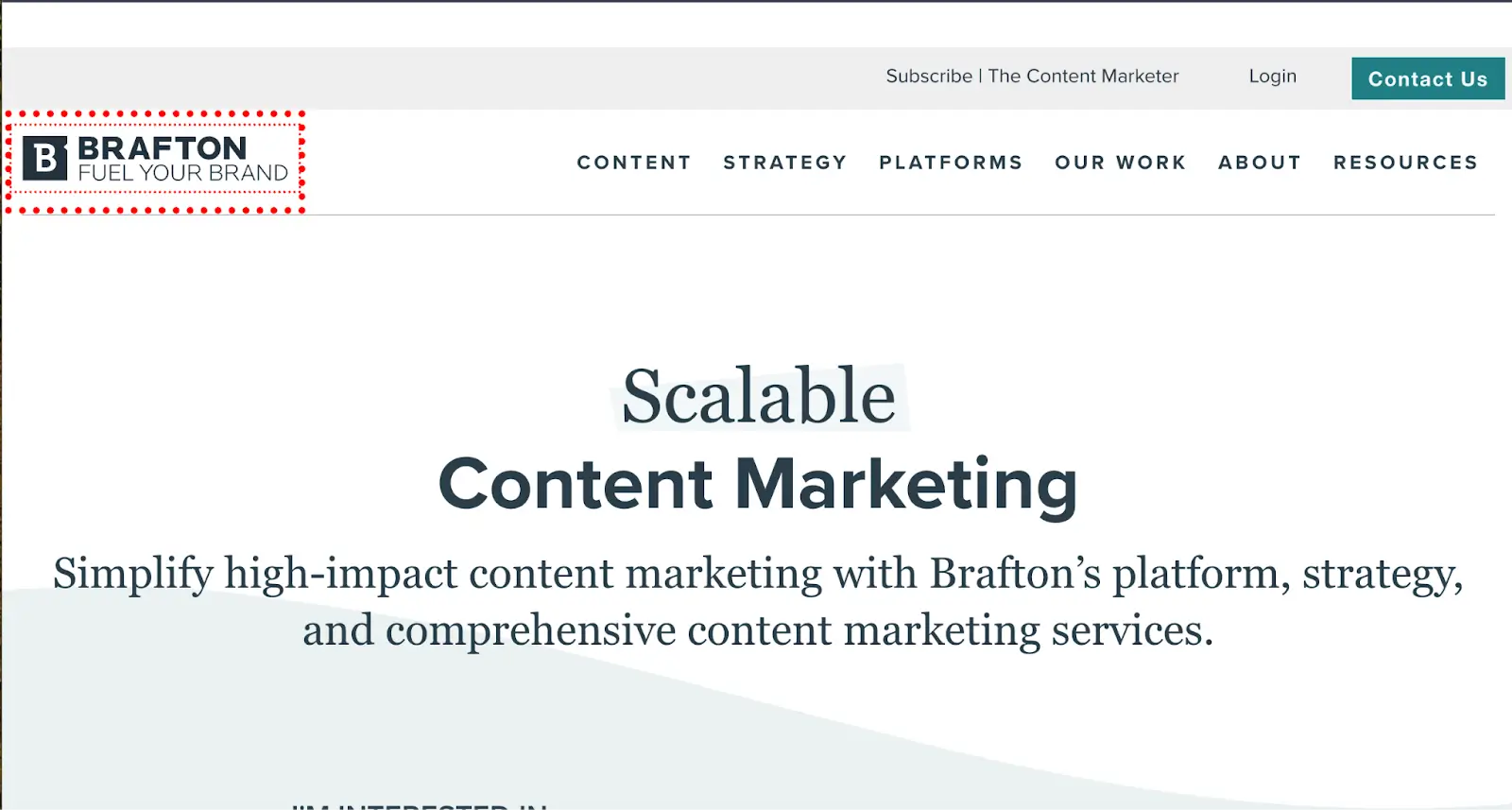
Brafton trades depth for speed. And they do it deliberately.
Their model is built around structured content production at scale. Writers, designers, strategists – all working inside a system that keeps output consistent. That’s how you support multiple clients across regions without breaking delivery.
From Boston to London to Sydney, they operate more like a distributed content team than a traditional agency. That matters for companies managing global messaging or multi-market campaigns.
But here’s where things usually go wrong. Content volume can look like progress, even when it isn’t. Brafton seems aware of that risk, which is why their work leans heavily on planning, keyword intent, and distribution.
Still, if a company’s main problem is authority – links, domain strength, competitive SERPs – content alone won’t carry the load. That’s the trade-off. For the right use case, it works. For the wrong one, it stalls quietly.
Core Services:
Why They Rank #6:
Clients usually praise Brafton for timely delivery, strong writing, and organized project management. The strongest feedback comes from B2B and enterprise teams needing reliable content output. A few long-term clients raise pricing concerns, which is worth watching as scope grows.
Brafton fits companies that need content depth more than SEO noise. Best for B2B, SaaS, insurance, tech, and enterprise teams with complex ideas to explain. If backlinks or technical cleanup are the main issue, look elsewhere. But for scalable content-led SEO, they’re a strong pick.
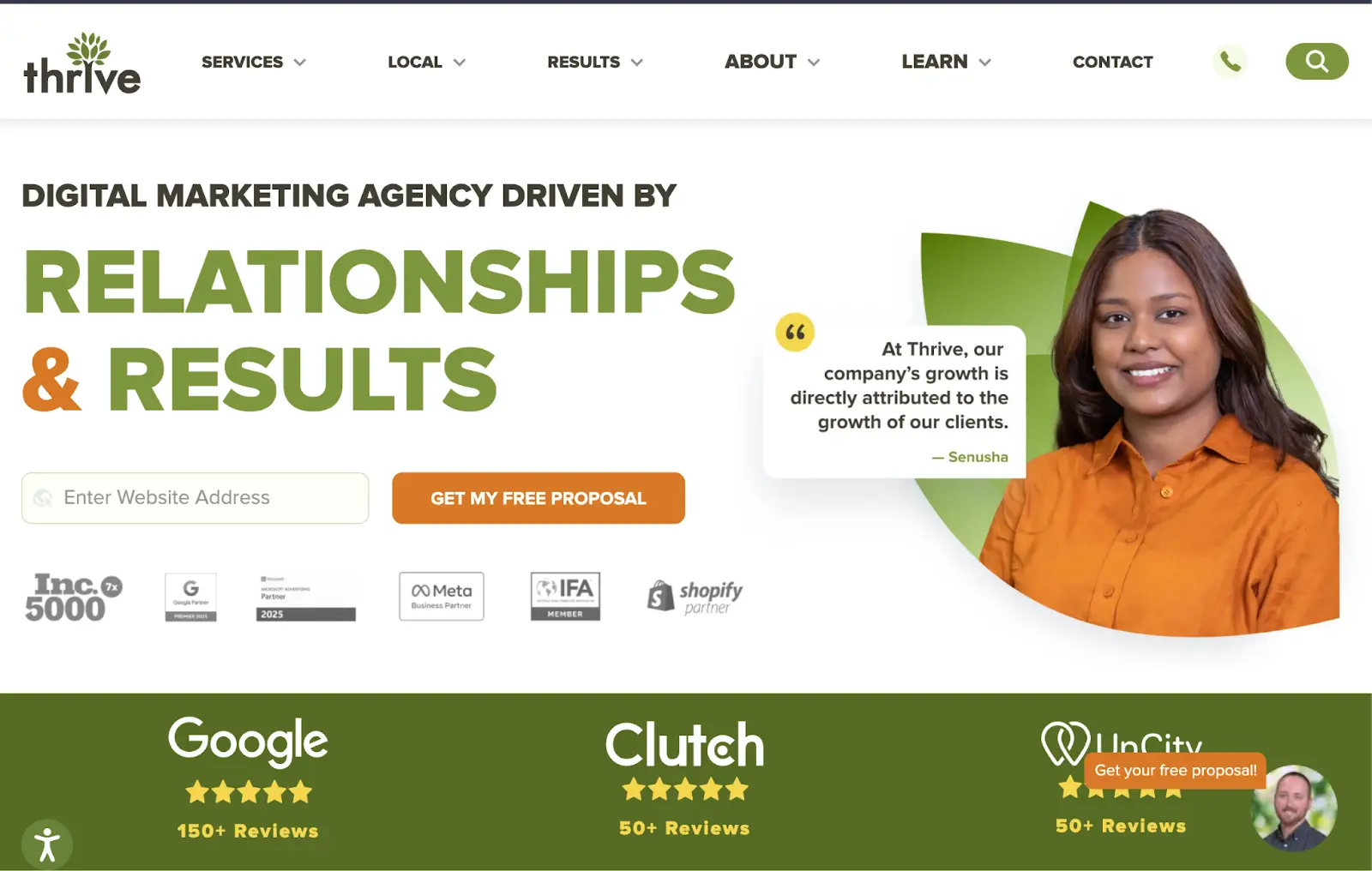
Thrive is what a full-service agency looks like when it’s been around long enough to stabilize.
They started in 2005, and now spread across multiple US cities, with clients ranging from small businesses to multi-location brands. That scale shows up in how they structure work – defined processes, clear handoffs, steady output.
They handle SEO, PPC, web, social, and reputation management. Everything sits under one roof. That’s useful when a business doesn’t want to juggle multiple vendors. But here’s where things usually get tricky.
Full-service setups tend to smooth out complexity. That works for general growth. It’s less effective when a business sits in a highly specialized niche. Some client feedback hints at that – needing to guide the agency more than expected in certain industries.
They’ve also leaned into AI SEO and generative search visibility. Early adoption is there. The real impact depends on how well that integrates with the basics – structure, authority, content quality.
Core Services:
Why They Rank #7:
Clients often praise Thrive’s responsiveness, communication, and care during execution. SEO wins show up in rankings, traffic, and lead growth. The weaker pattern is industry alignment. A few clients felt Thrive needed more direction to understand niche-specific sales realities.
Thrive fits businesses that want a relationship-led SEO partner with broad digital support. Strong for local, service, and growth-focused companies that need SEO plus PPC, web, and reputation help. For highly specialized B2B or complex technical markets, expect to provide more internal guidance early.
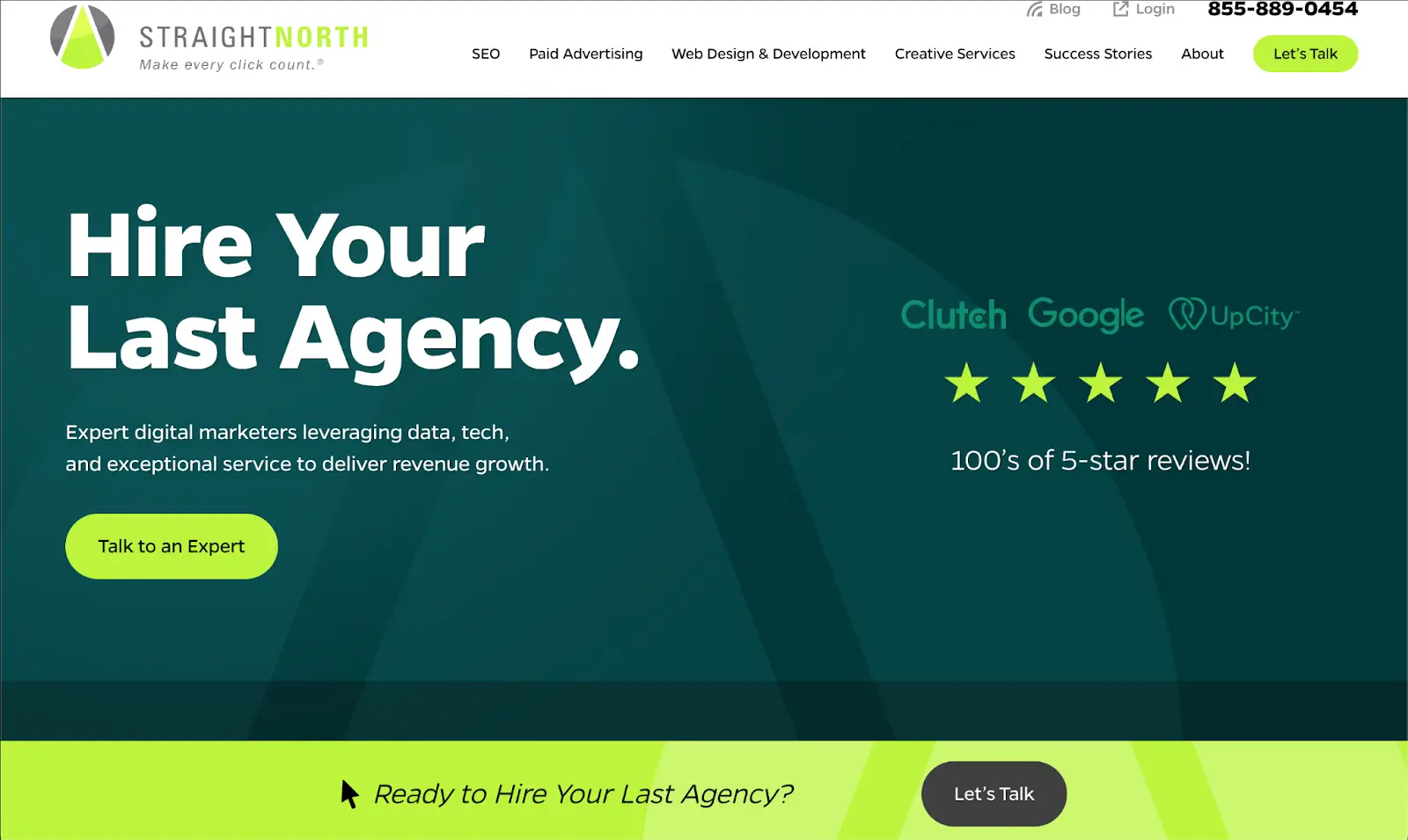
StraightNorth started in 1997, before Google became the center of the internet. That age matters. Not because older is automatically better, but because SEO agencies that survive this long usually learn one thing: rankings mean very little if leads are not tracked properly.
Their base is Chicago, with a strong US-based team. That gives them a different profile from agencies built around outsourced fulfillment or low-cost volume. They lean into lead generation, reporting, and sales impact rather than treating SEO as a traffic exercise.
The interesting part is their GoNorth! reporting system. They built it because clients often couldn’t tell which campaigns were actually producing business. That is where many SEO relationships get messy. Traffic rises, form fills come in, but sales teams still ask, “Which of these leads are real?”
Straight North also seems more comfortable in B2B, industrial, manufacturing, logistics, SaaS, and local service markets than trend-heavy consumer niches. Those categories need patience. Search volume is often lower, but one qualified lead can matter more than thousands of visits.
The friction point is setup. Some clients mention slower starts or early misalignment. That happens often in lead-gen SEO because tracking, sales definitions, keyword intent, and campaign structure all need to be nailed before results mean anything.
Core Services:
Why They Rank #8:
Clients often point to strong communication, detailed reporting, and better lead quality. Manufacturing, B2B, local service, and SaaS reviews are especially relevant. The main caution is early setup. A few clients mention slower starts before campaigns found rhythm.
Straight North fits companies that care more about qualified leads than flashy traffic charts. Best for B2B, industrial, SaaS, and service businesses with real sales pipelines. It may feel slower upfront, but that patience makes sense when tracking quality matters more than quick movement.
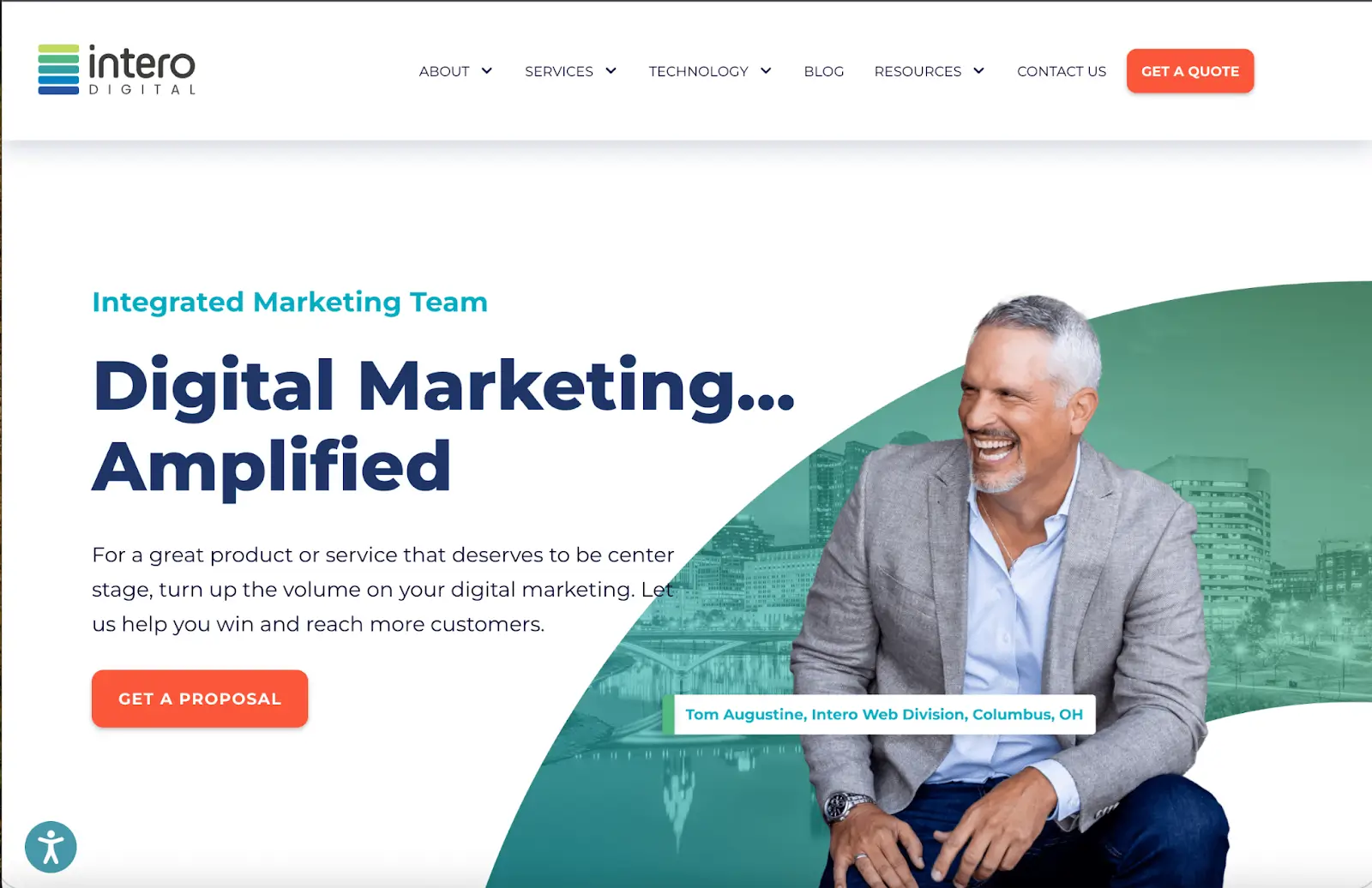
Intero Digital is built like a consolidated agency, not a small specialist shop.
That matters. Their story comes from combining multiple specialized agencies into one larger full-service operation. SEO, PPC, content, Digital PR, Amazon, web, and AI search all sit under the same roof. Useful for brands tired of managing five different vendors. Risky if internal coordination gets loose.
Their headquarter is in Colorado Springs, with additional locations across the U.S. That gives them a national footprint without feeling entirely coastal-agency driven. Their work seems especially relevant for brands that need search, paid media, and marketplace growth moving in the same direction.
The AI search angle is also more developed than most. Intero talks about GEO, Google AI Overviews, ChatGPT, Perplexity, and their own Intero Insight Engine™ and GRO™ framework. That sounds heavy, but the underlying point is fair: search visibility is spreading beyond classic blue links.
Where buyers need to be careful is expectation speed. AI visibility and SEO gains can sound immediate when packaged well. In reality, authority, content structure, technical health, and brand mentions still take time to build. Some client feedback also points to expectation management as an area to watch.
For larger brands, ecommerce companies, and B2B teams with multiple search surfaces to manage, Intero has the machinery. For very small companies wanting simple SEO execution, it may feel bigger than needed.
Core Services:
Why They Rank #9:
Clients often mention strong SEO and PPC results, clear communication, and a knowledgeable team. Manufacturing, ecommerce, education, and tech brands show up often. The main caution is timeline clarity. Some clients needed more realistic expectations around how fast SEO results should arrive.
Intero fits brands that need search, paid media, content, and AI visibility handled together. Best for ecommerce, B2B, manufacturing, and multi-channel teams. Smaller businesses may find the setup too broad. Their edge is integration, but the client still needs clear goals before the machine starts.
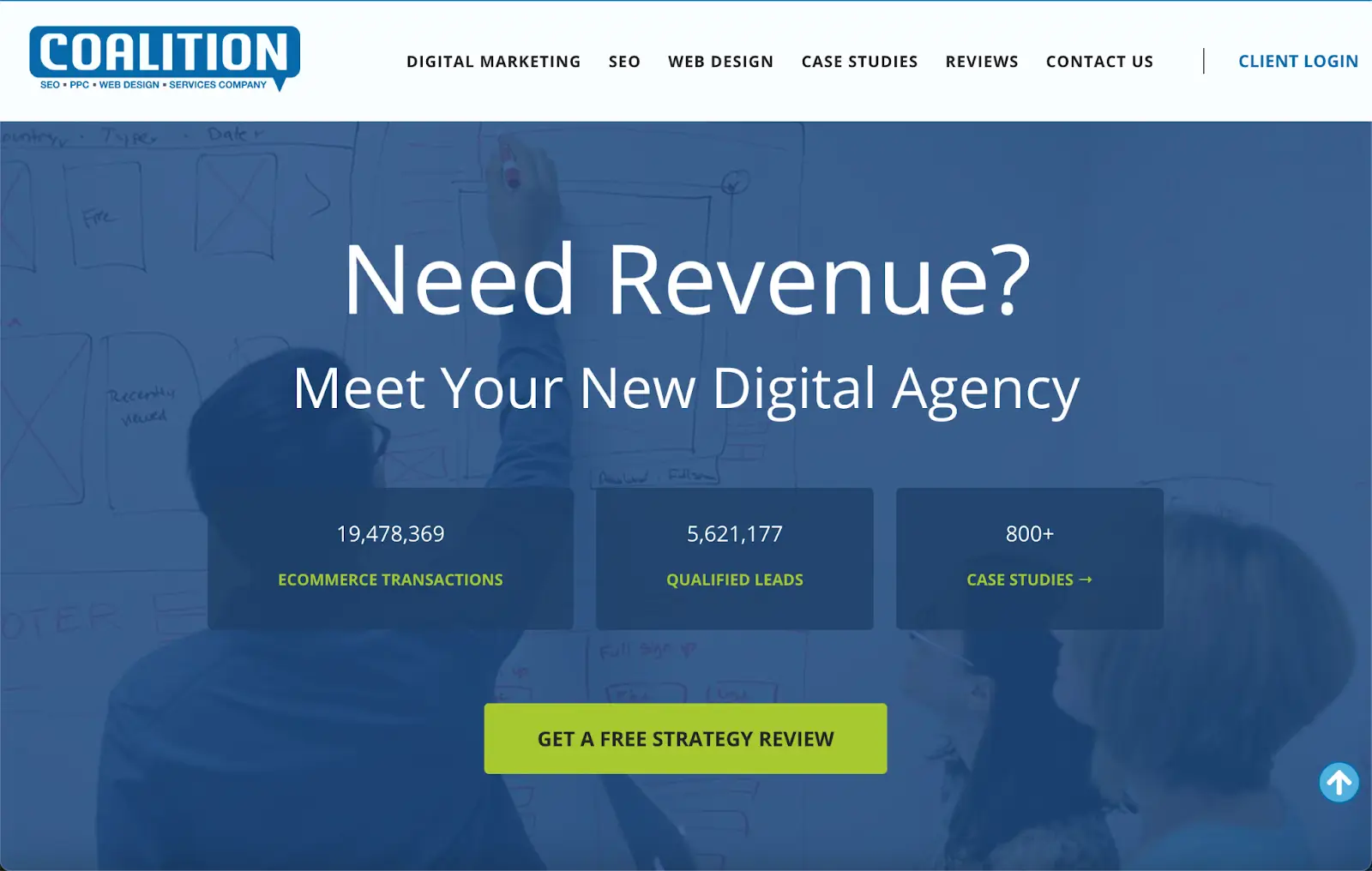
Coalition Technologies don’t just say they do SEO. They point to their own rankings, case studies, ecommerce transactions, qualified leads, and internal systems. That matters in SEO because the industry is full of agencies selling confidence with very little proof behind it.
Their model is especially strong around ecommerce, web development, and SEO working together. That combination is useful. A lot of ecommerce SEO fails because the site architecture, product pages, collection pages, speed, and conversion layer are treated as separate problems.
They also lean heavily into systems. Skills-tested hiring, internal training, checklists, custom software, AI tools, and guaranteed work hours appear repeatedly in their messaging. That tells you how they manage scale. Not by improvising. By process.
The trade-off is that process-heavy agencies can feel rigid if a client expects loose collaboration. Some reviews also mention delays or communication issues, which is often where scaled delivery models get tested.
Still, for businesses that need ecommerce SEO, AI SEO, technical execution, and conversion-focused development under one roof, Coalition has a serious operating base.
Core Services:
Why They Rank #10:
Clients often point to strong communication, detailed reporting, and better lead quality. Manufacturing, B2B, local service, and SaaS reviews are especially relevant. The main caution is early setup. A few clients mention slower starts before campaigns found rhythm.
Straight North fits companies that care more about qualified leads than flashy traffic charts. Best for B2B, industrial, SaaS, and service businesses with real sales pipelines. It may feel slower upfront, but that patience makes sense when tracking quality matters more than quick movement.
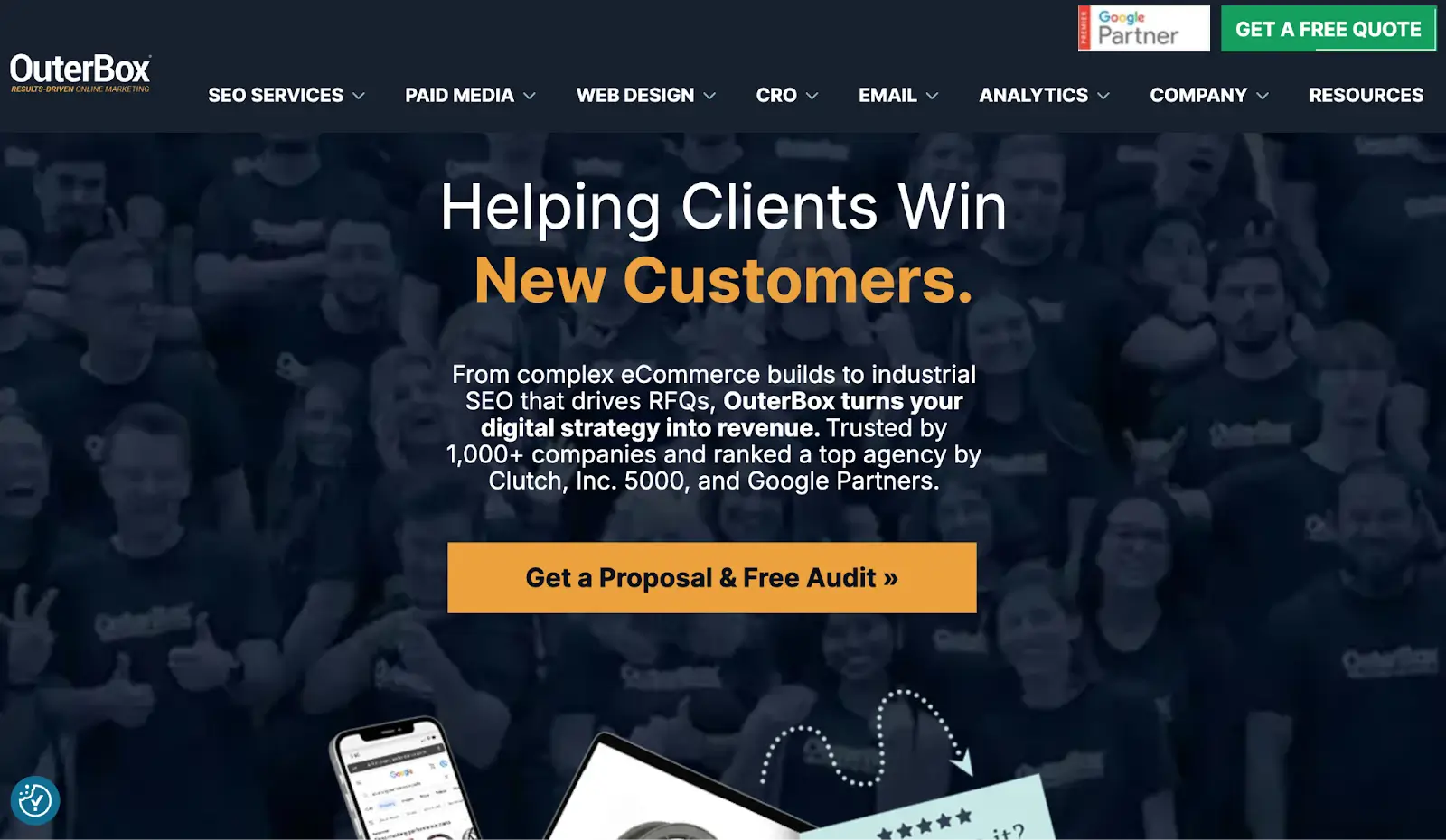
Their work connects SEO, paid media, CRO, email, web design, development, and analytics. For ecommerce and lead-generation brands, that matters because traffic by itself rarely fixes the actual revenue problem. The site still has to convert. The follow-up still has to work.
They’re based in Copley, Ohio, with offices in Houston and Rochester. That gives them a practical middle-market feel, not a flashy coastal-agency one. Their client mix reflects that too: manufacturers, ecommerce brands, industrial companies, service providers, healthcare, and local businesses.
OuterBox has more than 300 U.S.-based in-house experts and positions itself as one of the larger performance marketing agencies. That size gives them technical depth across SEO, PPC, development, and conversion work. It also means process matters. At this scale, strong outcomes come from systems, not heroic one-off effort.
One thing buyers often overlook: ecommerce SEO breaks when SEO teams do not understand product architecture, filters, category pages, platform limits, and checkout friction. OuterBox seems stronger than average here because development and CRO sit close to the SEO work.
The trade-off is on continuity. Some reviews mention PPC team turnover, which can interrupt campaign rhythm. That is worth watching if paid media is a major part of the engagement.
Core Services:
Why They Rank #11:
Clients praise OuterBox for organized delivery, technical SEO depth, web development, and measurable sales growth. Many mention strong communication and timely work. The one recurring caution is PPC team turnover, which can create handoff friction during longer paid media engagements.
OuterBox fits ecommerce, manufacturing, and lead-generation companies that need SEO tied directly to site performance. Strong choice when rankings, UX, CRO, and revenue tracking all matter together. Less ideal if you only need lightweight content or a small local SEO package.
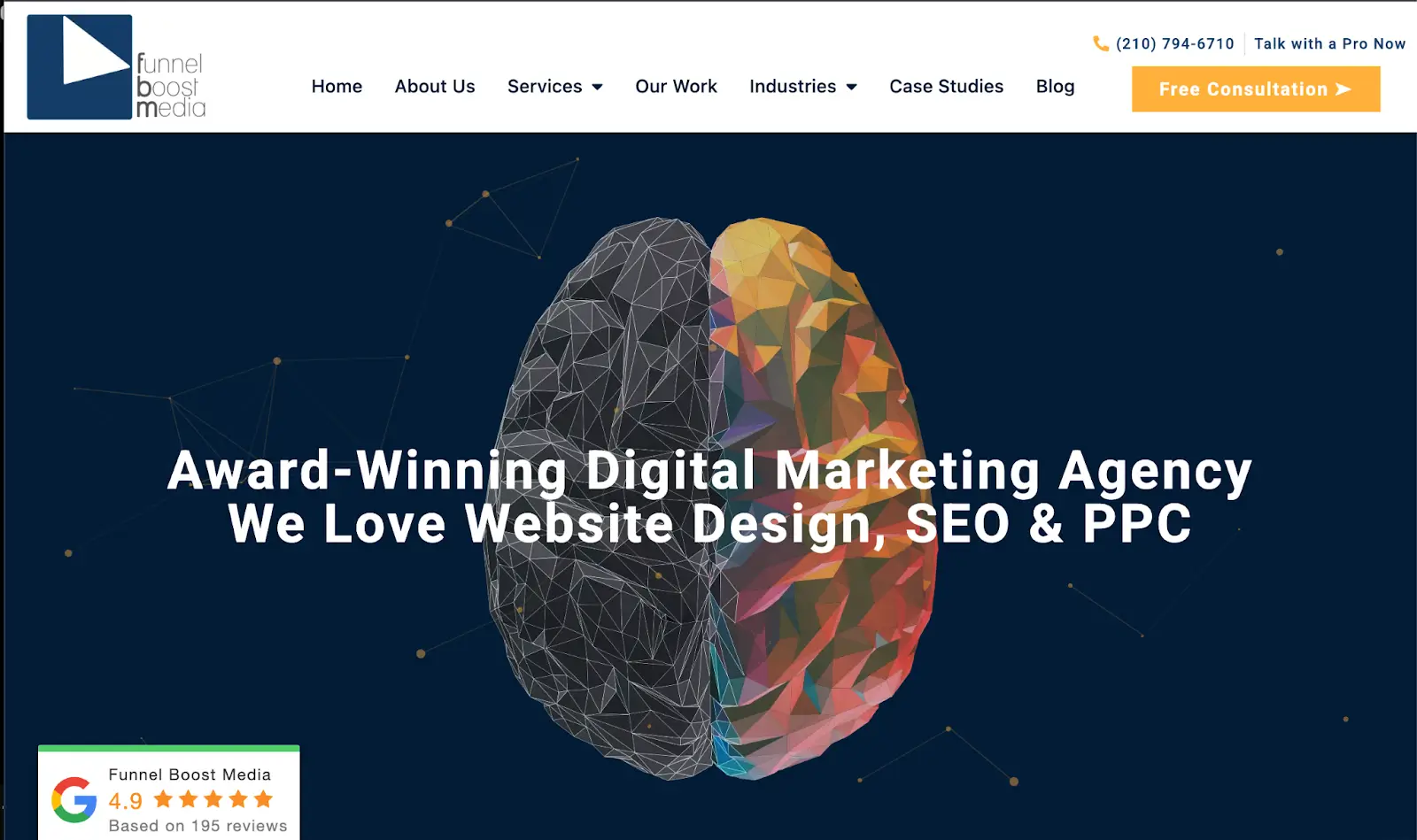
A lot of Funnel Boost Media’s appeal comes down to one thing: they don’t overcomplicate the conversation. Clients mention it directly. Straight answers. Clear timelines. No dodging questions. That sounds basic, but in SEO, it’s rare enough to stand out.
They’re based in San Antonio, but their reach covers multiple U.S. markets. Still, the work feels grounded in local lead generation. Businesses that need calls, bookings, appointments – not abstract traffic growth.
SEO makes up most of what they do. That tells you they’re not trying to be a “do everything” agency. The focus is getting visibility, then turning that into inquiries.
They’ve added GEO and AI visibility into the mix. That’s useful, but probably not the main reason clients see results. Most wins here still come from consistent execution on fundamentals.
Where things can go wrong? Expectations. Some clients expect rapid growth from relatively small budgets. That gap between expectation and reality shows up across the industry, not just here.
Core Services:
Why They Rank #12:
Clients often praise Funnel Boost Media for honesty, quick replies, and clear explanations. Local businesses mention better rankings, more leads, and smoother web projects. The main caution is one reported concern around questionable SEO tactics, so backlink transparency should be discussed upfront.
Funnel Boost Media is a strong fit for local businesses that need practical SEO, PPC, and web support without enterprise complexity. Best for home services, medical, legal-adjacent, wellness, and local professional firms. Ask direct questions about link-building methods, but their SMB focus is clear.
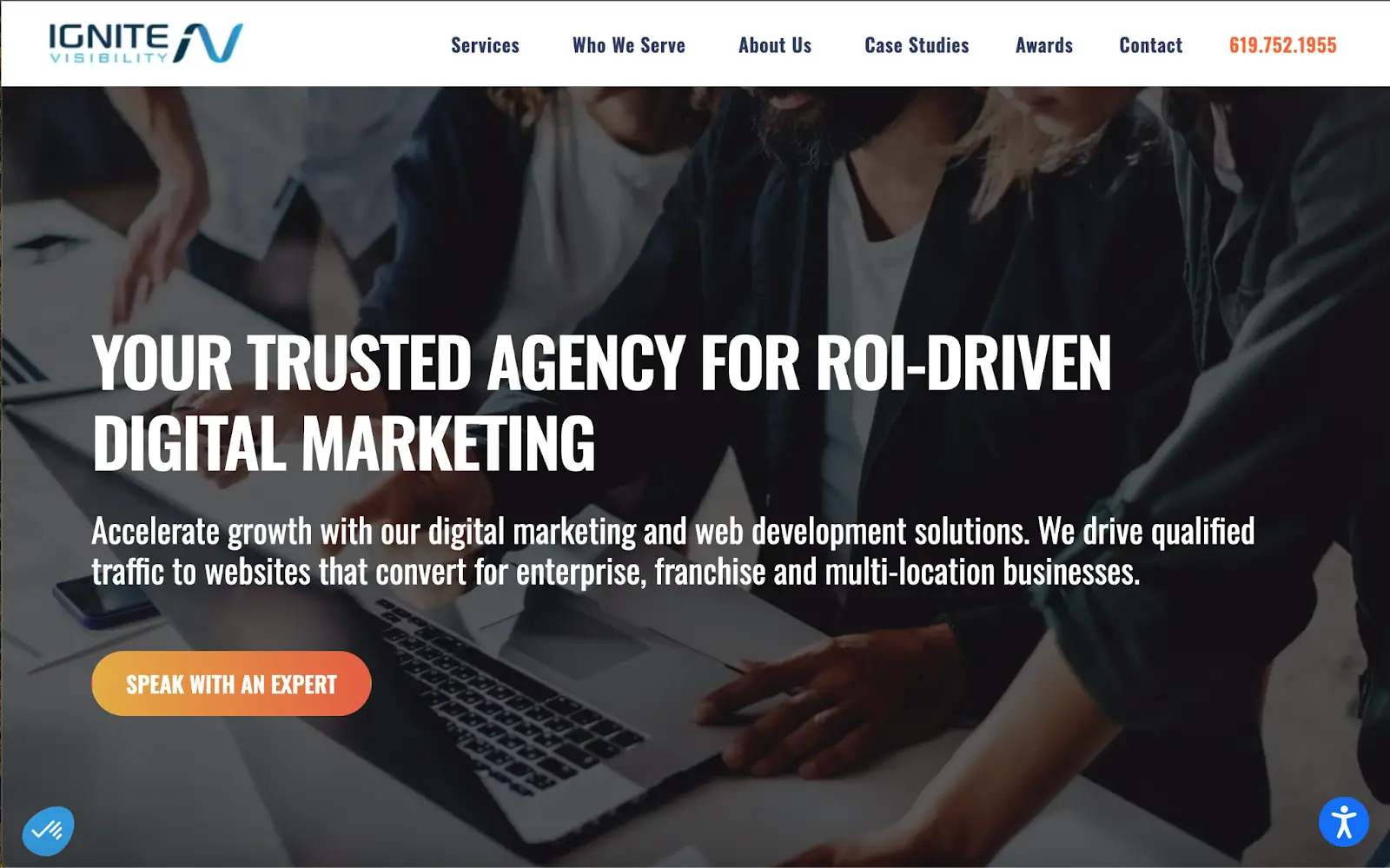
Ignite Visibility is built for companies that already have complexity baked in. Multiple locations. Multiple channels. Multiple teams touching the same budget. That’s a different kind of problem set, and most agencies underestimate it.
They operate out of San Diego but aren’t really tied to one market. The additional presence in Irvine, New York, and Orlando gives them exposure to very different business environments. That tends to shape how campaigns are handled. A healthcare group in California behaves very differently from a franchise chain in Florida.
What they offer is broad, but the interesting part is how it connects. SEO, paid media, CRO, content, web, email. These aren’t separate lines here. They’re treated more like moving parts of the same system. That’s closer to how real marketing works, even if it sounds messy.
They’ve also gone deeper into platform building. Tools for social publishing, reputation, analytics, forecasting. This is where agencies quietly try to solve scale problems without talking about them directly. When you’re managing thousands of locations or large budgets, spreadsheets stop working.
Here’s the part people overlook. Scale introduces friction. Communication slows. Execution becomes inconsistent. Ignite seems aware of that. Reviews consistently mention organization and responsiveness. Still, there are occasional misses, especially around timelines or performance speed.
That tension doesn’t disappear. It just gets managed.
Core Services:
Why They Rank #13:
Clients often praise Ignite Visibility for clear communication, organized project management, and campaigns tied to real business goals. The strongest reviews mention better leads, ROI, traffic, and brand visibility. A few weaker comments point to slower SEO or PPC progress, so expectations should be managed early.
Ignite Visibility is best for established brands that need a serious marketing system, not a lightweight vendor. Franchise, healthcare, ecommerce, home services, finance, and B2B companies will likely get the most value. Smaller businesses with tight budgets may find the scale excessive

Lounge Lizard doesn’t walk into SEO the same way most agencies do. They come from the website side first. And that changes how they think about search.
A lot of SEO work fails before it even starts. Wrong site structure. Weak messaging. Pages that look good but don’t convert. You can push traffic into that all day. It won’t move the business. This is where Lounge Lizard tends to approach things differently.
They’re based in New York, but their footprint stretches across cities like Los Angeles, Miami, Nashville, Austin, and D.C. That mix shows up in their work. East Coast financial brands, West Coast ecommerce, hospitality-heavy markets like Vegas and Miami. Different intent patterns. Different user behavior.
Their SEO offering isn’t isolated. It sits inside web design, development, UX, CRO, and branding. That sounds obvious, but most agencies still separate these things. Then they wonder why rankings don’t translate into revenue.
They’ve been around since 1998. Which means they’ve seen multiple versions of SEO come and go. Flash sites, keyword stuffing, mobile-first shifts, now AI search. The useful part isn’t longevity itself. It’s knowing which tactics were temporary hacks and which ones stuck.
Core Services:
Why They Rank #14:
Clients often highlight how Lounge Lizard connects design with SEO performance. Traffic growth, better rankings, and stronger lead flow come up repeatedly. Communication is steady. Execution is clean. Some clients mention needing more hands-on support post-launch when managing content internally.
Lounge Lizard makes sense for brands where SEO can’t be separated from the website itself. Especially ecommerce, financial, and service businesses. If your issue is deeper than rankings, this approach fits. If you only want quick SEO wins without touching the site, it may feel heavier than needed.
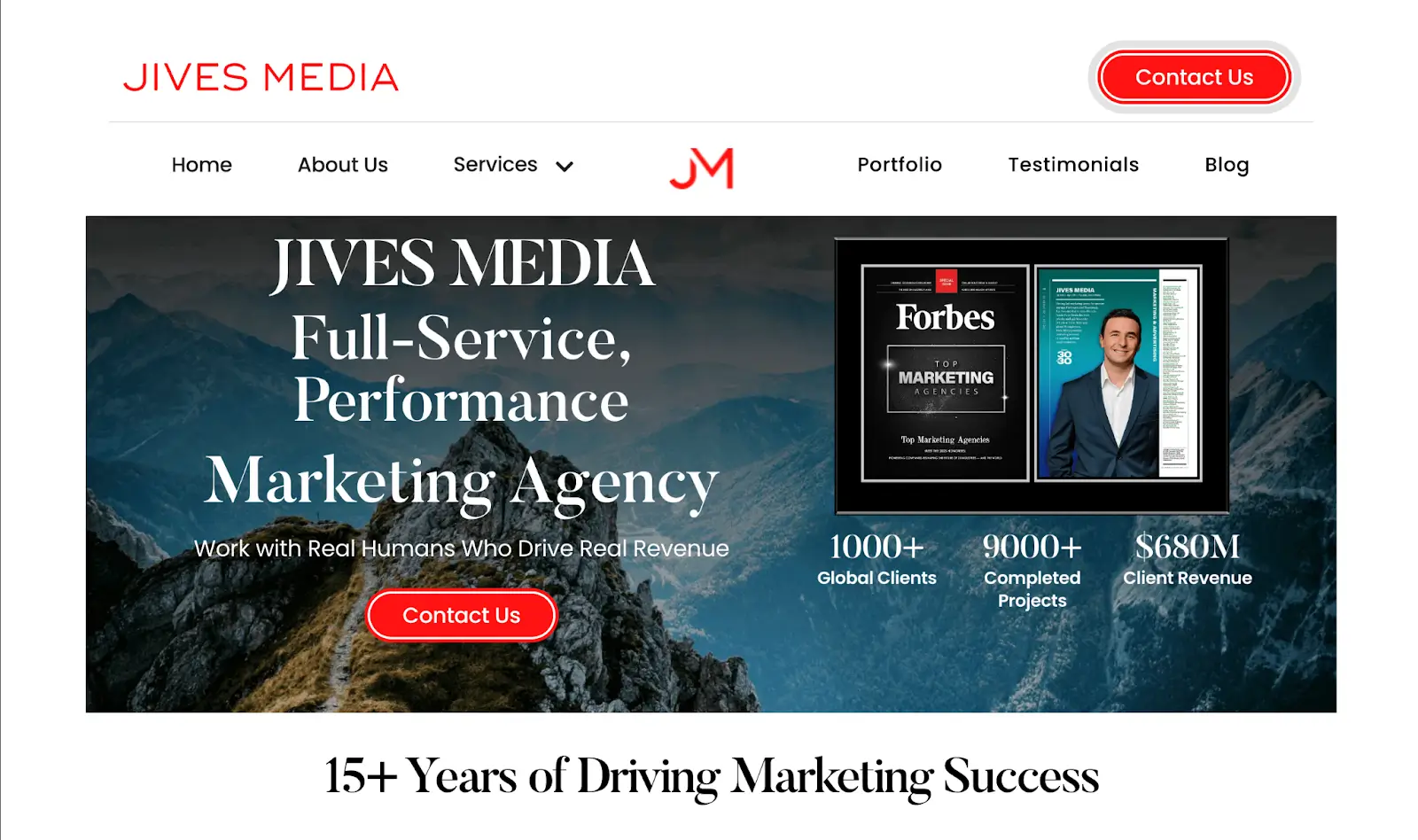
You see it often. Agencies talk strategy, but clients complain about silence. Jives Media avoids that trap more than most. Their reviews keep circling back to communication, responsiveness, and clarity. It sounds basic, but in SEO, this is usually where things break. Not rankings. Not links. Just poor coordination.
They operate out of San Francisco, with additional reach across the U.S. That puts them in a mix of markets. Tech-heavy environments, local service businesses, mid-sized companies trying to scale. Each one behaves differently in search, even if they’re chasing the same keywords.
Their core sits around SEO, supported by PPC, branding, and digital strategy. That structure matters. SEO rarely works in isolation anymore. If messaging is off, rankings don’t convert. If paid data isn’t feeding insights, keyword decisions stay guesswork.
A pattern shows up in their project types. Fixing technical issues. Reworking sites. Improving visibility after stagnation. That tells you something. They’re often brought in after something hasn’t worked, not just at the beginning.
Here’s where people usually misread agencies like this. High ratings don’t mean no problems. There’s at least one case where paid campaigns didn’t move and communication slipped. That’s normal. What matters is whether the system works most of the time. Here, it seems to.
Core Services:
Why They Rank #15:
Clients frequently mention clear communication, fast delivery, and careful execution. SEO reviews point to stronger traffic, better rankings, improved domain authority, and more leads. One weaker paid ads review raises a fair caution: buyers should define reporting, timelines, and success metrics early.
Jives Media is a strong fit for businesses that want SEO tied closely to PPC, branding, and practical lead growth. It works especially well for small to mid-market companies needing hands-on communication. Larger enterprise teams may want to check capacity before assigning complex, multi-region SEO programs.
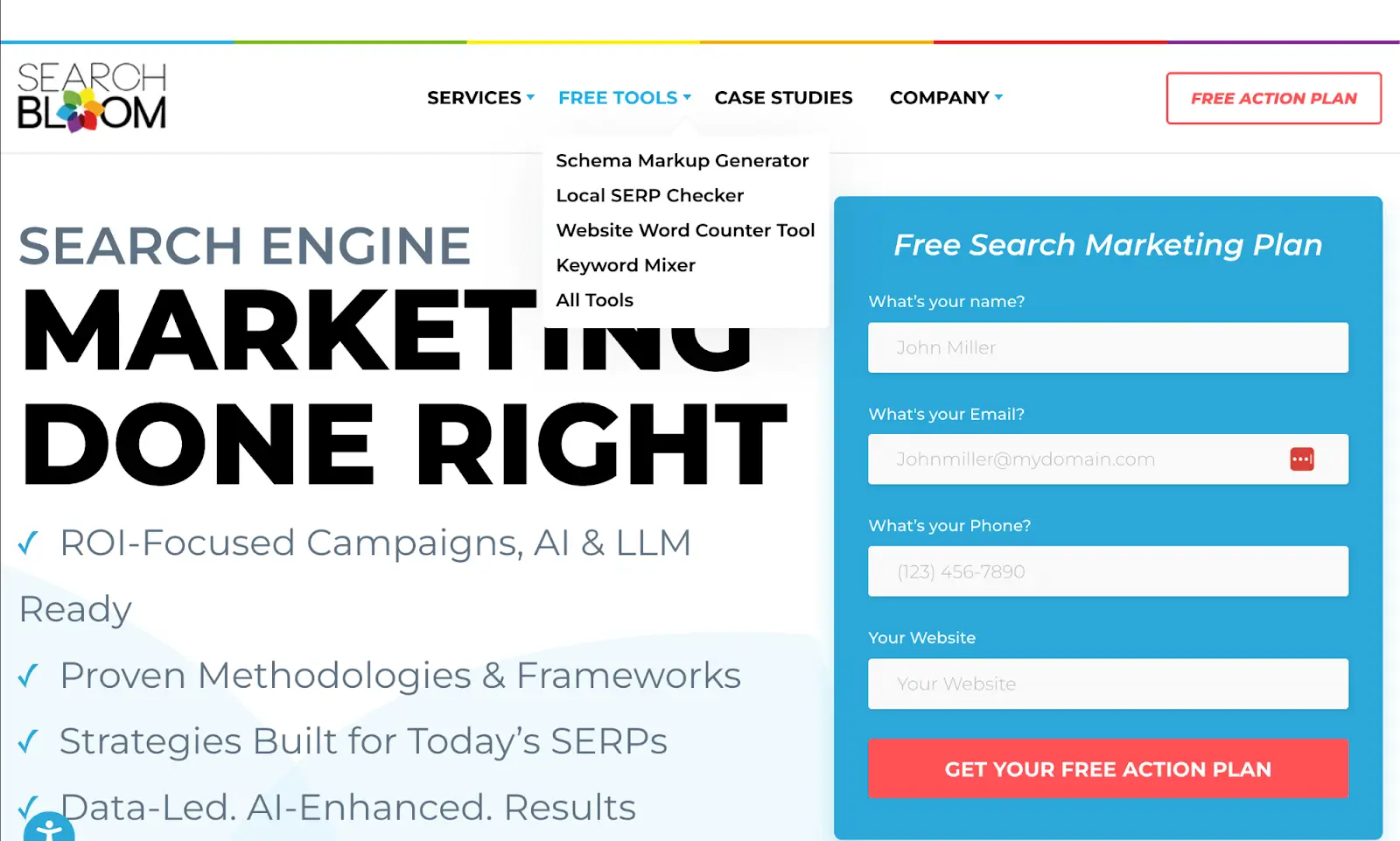
They lean on internal frameworks. ART, ACE, UTU. At first glance, it sounds like branding. But once you’ve seen enough SEO campaigns, you realize why this exists.
Things fall apart when every project runs differently. Content slows down. Links get inconsistent. Technical fixes sit in queues. Systems are how agencies stop that from happening.
The results they show look strong. Traffic growth. Lead increases. Revenue lifts. You’ve seen those claims before. The difference is whether they hold across different industries.
They’ve worked with ecommerce brands, SaaS companies, home services, even healthcare. That mix usually exposes weak strategies quickly. What works for one doesn’t always translate.
Here’s the part people overlook. SEO rarely breaks because of Google. It breaks because expectations and timelines don’t match reality. Clients want movement fast. SEO compounds slowly, then suddenly. That gap is where most partnerships collapse.
Searchbloom seems to manage that tension better than most. Reviews keep circling back to communication, clarity, and follow-through. Not glamorous. But in SEO, that’s usually the difference between something that eventually works and something that quietly dies.
Core Services:
Why They Rank #16:
Clients often describe Searchbloom as consistent and easy to work with. Communication is clear. Deadlines are met. Results show up in traffic, rankings, and revenue. A few reviews mention onboarding could be smoother for less technical teams, but overall sentiment stays strongly positive.
Searchbloom fits businesses that want SEO taken seriously, not treated as an add-on. It works well for companies focused on revenue growth, especially ecommerce and multi-location brands. If you need heavy education or hand-holding early on, expect to ask more questions upfront.
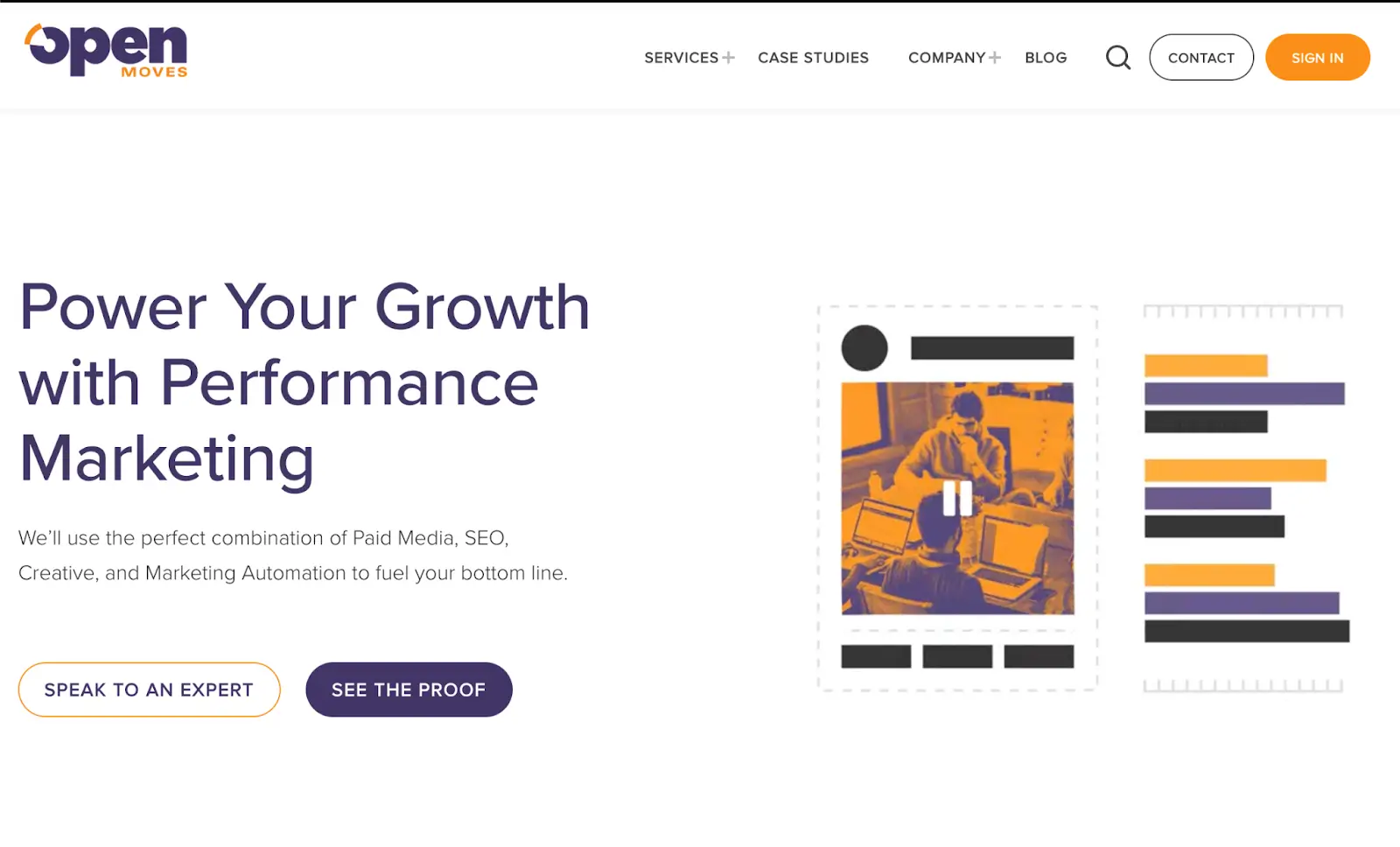
OpenMoves comes at SEO from a performance marketing angle. That matters because some SEO companies still act like rankings are the finish line. They aren’t. Rankings are only useful if the traffic turns into leads, sales, enrollments, bookings, or lower acquisition costs.
The agency is listed in Huntington, New York, with an Austin address also shown on its site. That gives it a practical U.S. footprint across Northeast and Texas business markets.
The New York side fits its middle-market and performance-heavy positioning. The Austin presence also makes sense for companies operating in tech, ecommerce, SaaS, and growth-stage B2B spaces.
SEO is not the largest service line here. PPC is. That can look like a weakness in a “Best SEO companies in the USA” list, but it also tells the truth about how OpenMoves works. Their SEO is usually part of a broader revenue system: paid search, paid social, CRO, creative, landing pages, and email automation all feeding the same KPI.
That is where a lot of SEO programs quietly go wrong. Organic traffic improves, but the landing page is weak. Leads come in, but the follow-up flow is slow. The client blames SEO, when the real leak is somewhere else. OpenMoves seems built to look at those leaks instead of treating search as a silo.
Their client base also points to a practical search focus. Reviews mention ecommerce, healthcare, higher education, nonprofits, manufacturing, consulting, and lead-generation companies.
Those are not vanity-traffic categories. They care about cost per lead, form submissions, inquiries, enrollments, and revenue. The SEO has to prove itself.
OpenMoves is also part of Ionik Group, which gives it a larger platform behind the boutique agency model. That can be useful when clients need performance marketing, data, creative, and programmatic support under one roof.
Still, larger platform support only matters if the day-to-day team stays close to the account. Reviews suggest clients value their responsiveness, project management, and willingness to adapt.
Core Services:
Why They Rank #17:
Clients praise OpenMoves for clear communication, quick response times, and performance gains across PPC and SEO. Reviews mention stronger organic traffic, better lead flow, first-page rankings, and improved conversions. A few clients note they could learn client-specific products faster.
OpenMoves is best for companies that want SEO tied directly to paid media, CRO, and revenue. It fits ecommerce, lead-gen, healthcare, education, and B2B teams. Pure SEO-only buyers may find the model broader than expected, but performance-focused brands will likely appreciate that.
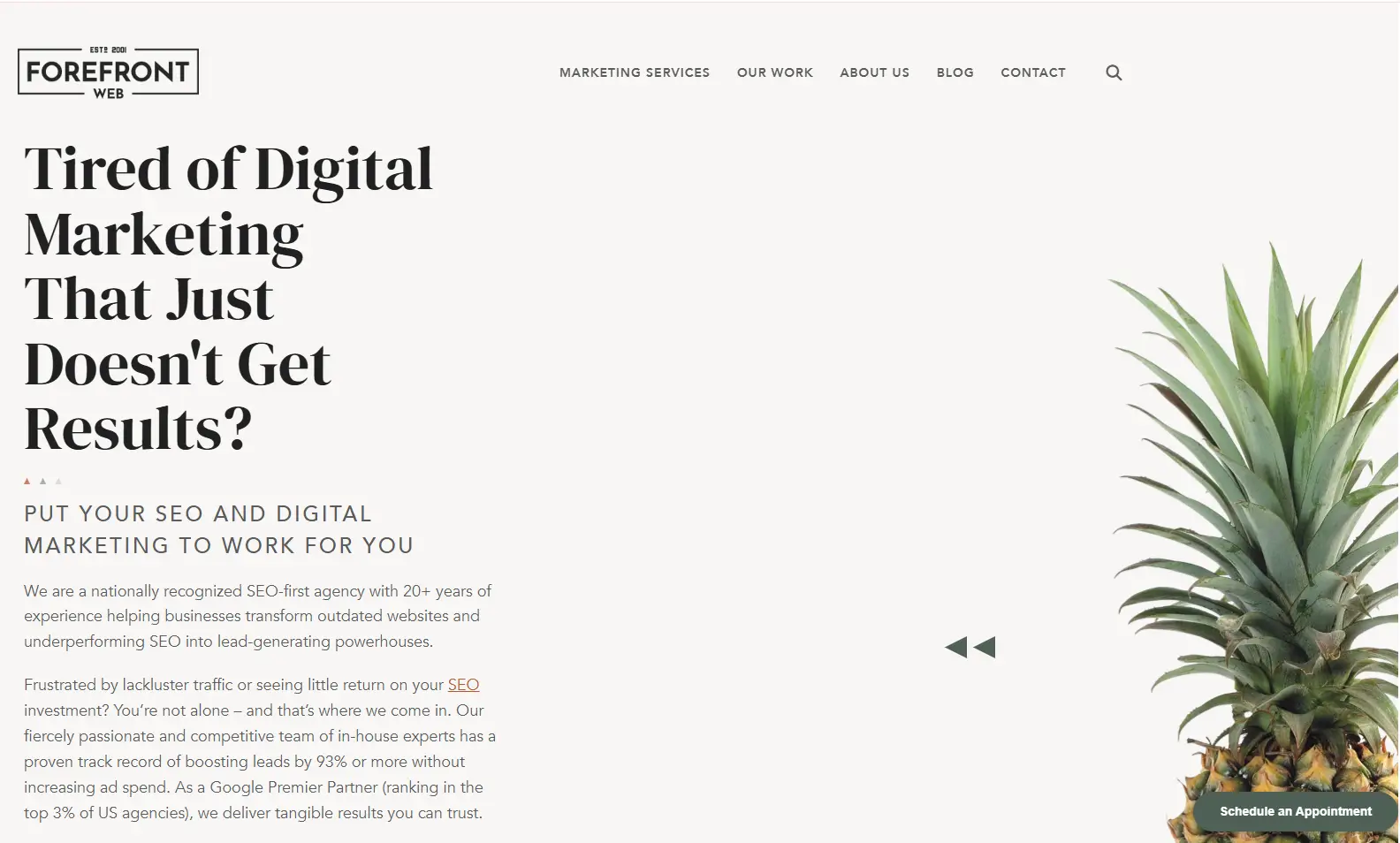
ForeFront Web has been doing this since before most of their competitors knew what SEO stood for.
Founded in 2001 and based in Dublin, Ohio, they’ve grown into a Google Premier Partner — a designation that puts them in the top 3% of agencies in the US. That’s not a vanity badge. It reflects campaign volume, performance history, and client retention over time. They’ve also landed on the Inc. 5000 Midwest list, ranking #187.
What makes them distinct is the deliberate refusal to automate or outsource. Every project manager, analyst, content writer, and designer works out of their Dublin HQ. In a market where most agencies quietly offshore execution, ForeFront makes in-house delivery a genuine selling point — and their 4.9 Google rating suggests clients notice.
Their approach centers on what they call Success Plans — custom SEO roadmaps built around the full customer journey, not just rankings. The plans get revisited regularly by a live strategist, not a dashboard. It’s a slower, more hands-on model that suits businesses tired of chasing metrics that don’t move revenue.
The trade-off is scale. This is a lean, tight team. That’s a strength when you want genuine access and accountability. It’s a consideration if you’re expecting the infrastructure of a 300-person shop.
Core Services:
Core Services:
Why They Rank #18:
Clients praise timely delivery, technical guidance, and patient support. Several clients mention strong project management and clear communication. They also value the team’s ability to simplify complex website work.
ForeFront Web fits businesses wanting SEO and website work under one team. You should consider them when ownership and direct strategist access matter. Their smaller structure supports closer working relationships. However, it may offer less capacity than a large national agency.
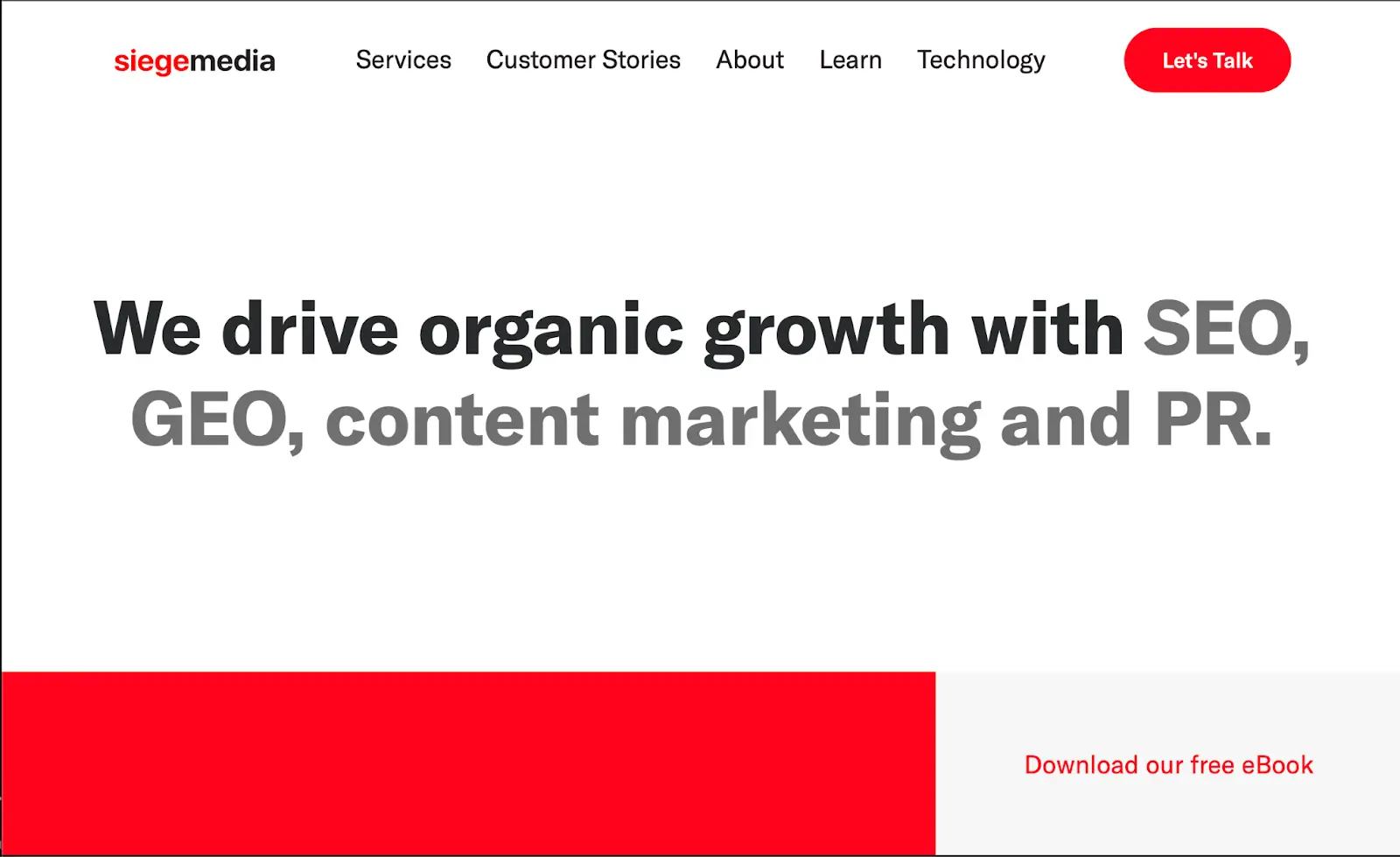
Most companies think they have a content problem. They don’t. They have a distribution problem disguised as content. Siege Media seems built around that exact gap.
They’re headquartered in Austin, with roots in San Diego and a presence in places like New York and Chicago. That mix shows up in the kind of work they take on. SaaS teams chasing product-led growth. Fintech brands fighting for trust. Ecommerce companies trying to win crowded SERPs where every page looks the same after result #3.
Here’s what they’ve figured out early. Publishing more content doesn’t fix anything. It usually makes things worse. More pages, more maintenance, more internal confusion. What actually moves the needle is picking the right topics, building assets that deserve links, and pushing them hard enough to matter.
That’s where their model leans in. SEO, content, and digital PR aren’t separate tracks. They feed each other. Content gets built with ranking and promotion in mind from the start. Not written first and “optimized later,” which is where most teams quietly waste months.
They also put real weight behind design. That’s not just for looks. In competitive industries like SaaS or health, plain text doesn’t attract links anymore. Interactive assets, visuals, tools. That’s what gets shared. That’s what earns authority.
Their reported traffic value numbers are large. Anyone can say that. The more interesting part is how those numbers usually happen. Not from one big win, but from assets that keep pulling traffic months later. That kind of compounding only works when the initial bet was right.
Here’s the catch most people miss. This approach needs patience and budget. You don’t get quick wins from it. And if internal teams aren’t aligned on content, approvals, or positioning, things slow down fast. That’s where even strong agencies lose momentum.
Core Services:
Why They Rank #19:
Clients praise Siege Media for sharp SEO thinking, strong writing, polished design, and content that earns traffic. Reviews often mention organized workflows and clear communication. Some clients wanted broader services, but most seem to value Siege for deep content-led organic growth.
Siege Media is best for brands that need authority-building content, not basic SEO maintenance. SaaS, fintech, ecommerce, health, and real estate companies are strong fits. It may be less ideal for teams needing paid media or full-service digital marketing under one roof.
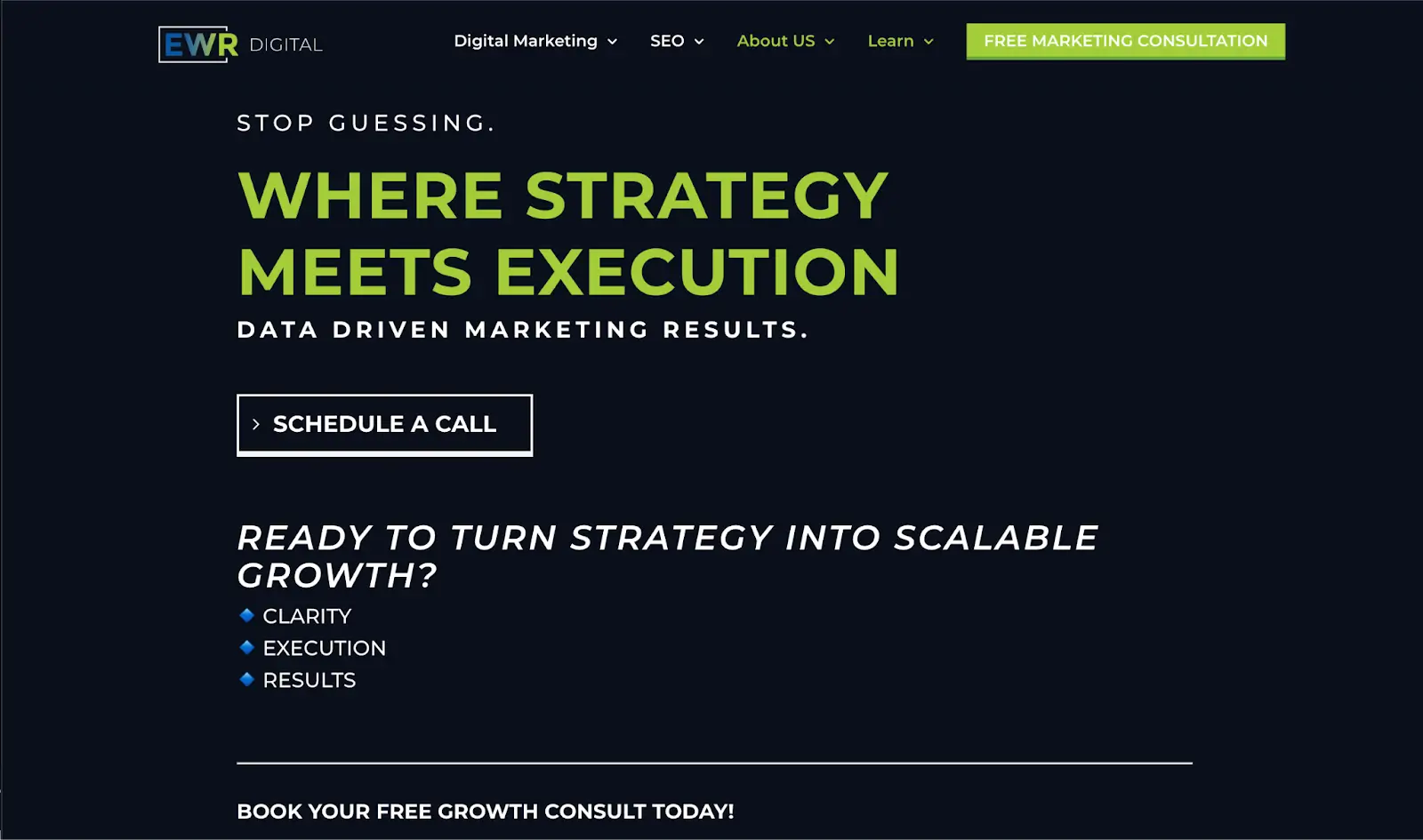
Their setup is fairly direct. SEO at the center. Strategy, PPC, web, and branding feeding into it. That alignment matters more than people think. When those pieces don’t talk to each other, SEO starts looking like it’s underperforming when it’s actually just disconnected.
They also push into AI search visibility. Not as a separate service, but as an extension of SEO. That’s probably the right way to think about it. Search behavior is shifting, but the fundamentals don’t disappear. Authority, relevance, trust. Those still decide who gets seen.
Clients highlight responsiveness and ongoing support. That’s where things usually fall apart elsewhere. Agencies start strong, then drift. Updates slow down. Priorities blur. Momentum fades. It’s less about big mistakes and more about small delays stacking up.
One thing to keep in mind. Their model works best when clients are engaged. SEO here isn’t passive. It needs input, alignment, and patience. Without that, even good execution starts to feel slow.
Core Services:
Why They Rank #20:
Clients often praise EWR Digital for strong SEO knowledge, clear communication, and long-term reliability. Reviews mention better rankings, more traffic, higher revenue, and positive ROI. One weaker note appears around social media ad performance, which may depend heavily on industry fit.
EWR Digital is best for businesses that need SEO tied to trust, authority, and lead generation. Houston-based service companies, healthcare brands, industrial firms, and regulated businesses are strong fits. It may be less ideal for teams wanting purely social-first growth.
When agencies fail, they don’t fail loudly. They stay busy. Reports come in. Work gets done. The problem shows up later – when momentum never really builds. The gap is rarely effort. It’s how the work is structured, prioritized, and connected to actual search behavior.
That’s why you should choose whom you work with carefully. And this is how you do it, this is how to choose the right SEO companies:
Most agencies will list SEO services like audits, content, technical fixes. That’s table stakes. What matters is how those pieces connect. Ask how they decide what to do first. Not what they can do – what they won’t do early. That tells you if they understand sequencing or just execution.
A common mistake here: agencies front-load technical work because it’s easy to show. Meanwhile, authority and content positioning – the things that actually move rankings – get delayed.
Everyone offers link building services. Very few can explain how they control quality at scale. You’re not just buying links. You’re buying risk management. Bad links don’t always hurt immediately. They stack quietly, then drag performance later.
Push deeper. Ask how they secure placements, what they reject, and how they balance Digital PR vs manual outreach. If the answer sounds too clean, it usually is.
This is where things break more often than people admit. A lot of agencies treat web design and SEO as separate tracks. That creates friction later – pages that look good but don’t rank, or pages that rank but don’t convert.
Ask how they handle structure before design. Navigation, internal linking, content hierarchy. If those decisions come after design, you’re already behind.
Local SEO is not just “add location pages and optimize a Google profile.” The real difference shows in how they handle proximity, local intent shifts, and review signals. Small changes here can move rankings fast – or stall them completely.
For national campaigns, it’s a different game. More competition, slower movement, heavier reliance on authority. Agencies that treat both the same usually underperform in one of them.
Not all SEO behaves the same. B2B SEO often looks slow at first because search volume is lower, but intent is higher. It needs patience and tighter keyword selection. Many agencies misread this and chase traffic instead of pipeline.
With SaaS link building, things get even tighter. You’re competing in saturated spaces where links aren’t optional – they’re the baseline. Ask how they approach niche authority, not just volume.
This is subtle, but it’s usually the clearest signal. If they focus heavily on rankings and traffic, they’re telling you what’s easy to measure. Not what’s hard to achieve.
Push for how they connect SEO to outcomes. Not just leads or conversions – but what happens after. Because a lot of SEO “wins” don’t translate into business impact.
And this is where most companies get stuck. They see movement, but not progress.
Choosing an SEO agency looks simple on paper. Shortlist, compare, decide. In reality, most mistakes happen before the contract is even signed. And once they happen, they don’t show up immediately. They show up 3-6 months later, when nothing has moved and nobody agrees on why.
Here’s where things usually go wrong.
A lot of companies hand SEO to an agency like it’s a checklist item. Fix pages. build links. send reports.
That model breaks quickly. SEO touches product pages, dev resources, content, brand positioning, even sales messaging. If internal teams aren’t aligned, the agency ends up working in isolation. Output happens. Outcomes don’t.
This is especially common in SaaS and B2B companies where product, marketing, and content teams operate separately. SEO gets stuck in the middle.
Case studies look clean. Growth charts. ranking screenshots. traffic spikes.
What you don’t see is the timeline, the budget, the failed experiments, or how much authority the site already had. Most results are not portable. What worked for a fintech brand won’t translate directly to a local service business in Dallas or a healthcare clinic in Miami.
In competitive U.S. markets, context matters more than results.
This one happens constantly. Companies invest in SEO but keep a slow, confusing, or outdated website.
Traffic comes in. Users leave. Conversions don’t happen. Then SEO gets blamed. Ecommerce brands feel this the most. Product pages rank, but poor UX, weak trust signals, or slow checkout kill revenue. SEO didn’t fail. The site did.
Most businesses still chase “rank #1 for X keyword.”
That’s outdated thinking. Modern SERPs are crowded. Featured snippets, videos, maps, AI summaries, brand panels. Winning often means showing up multiple times, not just once.
Agencies that only track keyword position miss this completely. And clients don’t realize they’re losing visibility even when rankings look stable.
There’s a belief that publishing strong content is enough. It isn’t. In industries like fintech, SaaS, and health, everyone is publishing. The difference is distribution. Links, mentions, partnerships, PR, visibility outside your own site.
Most content fails quietly because nobody sees it. Not because it’s bad.
You can build a perfect page technically and still fail. Wrong intent. That’s it.
This shows up a lot in local SEO and lead-gen businesses. Agencies target high-volume keywords that bring traffic but not buyers. Months later, traffic is up, but leads haven’t changed.
Fixing intent after publishing is expensive. It’s where many campaigns lose momentum.
Month two hits. Nothing significant has moved yet. Internal pressure builds. More content. more links. more changes. everything gets accelerated.
This is where campaigns break. SEO compounds slowly, then suddenly. Forcing early results usually leads to rushed content, low-quality links, and misaligned strategy.
You see this often in venture-backed startups where timelines are tied to growth expectations, not reality.
Some agencies offer everything. SEO, PPC, social, branding, CRO. That sounds efficient. It often isn’t.
Without depth in SEO, the work becomes surface-level. Basic audits. generic content. light optimization. Nothing that competes in serious markets like New York, Los Angeles, or national ecommerce.
Breadth without depth spreads resources thin.
Choosing the best SEO company is less about finding the loudest company and more about finding alignment. The strongest agencies usually do a few things well: they communicate clearly, understand business goals beyond rankings, and build systems that can survive algorithm shifts instead of chasing shortcuts.
That said, SEO has become harder to fake. Competitive industries now expose weak strategy quickly. Generic content, low-quality links, and surface-level audits rarely hold up anymore.
The agencies that consistently win today are the ones treating SEO as long-term market positioning, not a monthly checklist. And honestly, that difference becomes obvious faster than most businesses expect.
This study of the Top SEO Agencies in the USA is based on a thorough data collection process and analysis of over 500 top companies, ultimately narrowing it down to the final list of 50 SEO agencies. The data was collected from reliable and reputable sources, including Clutch, DesignRush, Ahrefs, Semrush and other industry-standard platforms.
Data Collection:
Data Categorization and Weighting:
The data was categorized into five main areas, each weighted based on its significance in determining the overall score. The categories and their respective weightings are as follows:
Brand Authority (30%)
Cost Evaluation (-20%)
Client Satisfaction Score (60%)
Employee Satisfaction Score (30%)
Scoring and Ranking:
Why These Factors Matter?
By combining these factors and assigning appropriate weights, we were able to create a comprehensive and balanced ranking of the top SEO companies in the USA. This methodology ensures that the rankings are based on a combination of client success, agency expertise, and affordability, offering businesses valuable insights into which agencies are best suited to their needs.
Note: No agency paid for inclusion or a higher ranking in this guide. All rankings and scores are based solely on publicly available data collected at the time of publication.
Note: These rankings reflect the market landscape at the time of publication. Although individual metrics may change over time, the evaluation framework prioritizes long-term capability signals, making major ranking fluctuations unlikely.
Cost Savings
Premium Links
Book a call to discuss how we can help you dominate competitive and high search volume keywords while keeping the cost low.
They are solid people who run a quality service and always deliver. Highly dependable and honest.

Founder, DeepAI
Find out what’s wrong with your site in 2 business days
They are solid people who run a quality service and always deliver. Highly dependable and honest.
Founder, DeepAI
