Top 55 Leading Web Design…
California is one of the most competitive digital markets in the world.…

You have put a lot of effort into building your website but it’s not, a) generating organic traffic, b) on the first page of search engine results, c) getting enough referrals as evident from Google Analytics. The reason?
There may be multiple reasons why it’s not there at the top. From a case of misplaced keywords to low-quality backlinks to non-optimized content – the list can be long. How to deal with it?
Your top bet is using organic SEO techniques. Let’s delve into this topic to know what to do when our site doesn’t walk the talk.
In its simplest term, organic SEO applies non-paid strategies to make a site rank high on search engines like Google, Bing, and Yahoo.
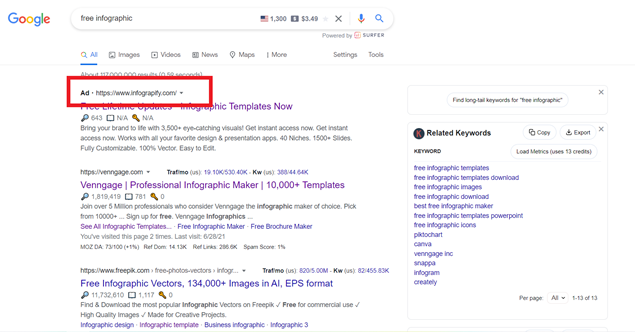
It’s the opposite of paid SEO where a business ranks its site high through paid ads that sit on top of the SERP.
Research has shown that more than half of web traffic is driven by organic searches. Therefore, your site must be up there on the search engine rankings.

Google and other search engines crawl or discover a site and rank it according to the relevance of the content and its level of authority. With guidance from an organic SEO expert, you can achieve:
Higher chances of being crawled and indexed by Google.
Relevance by using the right keywords at the right places of the content without overstuffing it.
A high score on authority by ensuring your site has been backlinked by other websites that deem you to be an authority in your industry.
Check out how OneLittleWeb builds off-page organic SEO at https://staging.onelittleweb.team/guestpost/
So, if organic SEO is the right way to go, then why do businesses pay to have their site appear on top of the search engine page?
Here’s a glimpse of the pros and cons of organic and paid searches.
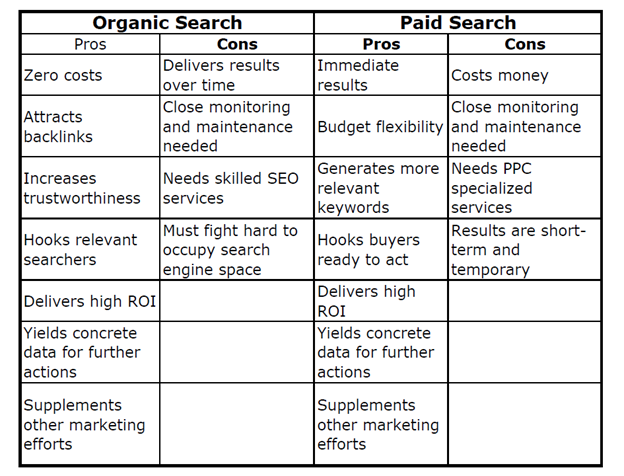
Here’s the deal:
If you want quick results within a short time and you are targeting a ready-to-buy audience, then paid adverts will move the sales needle for you.
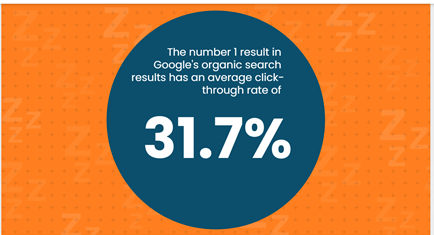
Google is the number one search engine and with a whopping 90%+ market share, their responsibilities also lie heavier on their shoulders.
The top search engine company must maintain its leadership position by ensuring they
Besides the information on your website, Google also checks whether the website is:
User-friendly
Easily navigable
Speed-optimized for fast loading
Optimized to reduce bounce rates.
Therefore, if you want your site to be on the first page of Google SERP, then you have to follow the guidelines set by Google. At the same time, to stay on top of the game, you need to keep a lookout for the changes that Google brings in its algorithm.
As with all businesses, you first need to identify the problem and then apply the right strategy to solve it and reach your goals. White hat SEO involves breaking down the process into two parts – SEO audit and SEO strategy.
An SEO audit will point out the technical, linking, and content issues your website has and will guide you to the right strategy.
Organic search engine optimization encompasses different aspects and no one SEO strategy may fit the bill. Therefore, the first thing to do is identify the gaps in your site.
To help you do so, you can refer to Mozlow’s Hierarchy of SEO Needs. This is similar to Maslow’s Hierarchy of Needs which says that until the primary needs of human beings are met, they will not be able to fulfill their secondary or higher needs.
Guess what – the same analogy can be applied to your SEO strategy. Until you ensure Google can find and index your website, there’s no point in giving it a more user-friendly interface.

Alternately, you can conduct an SEO audit with one of the SEO audit tools.
Organic SEO strategies are either on-page or off-page.
On-page SEO involves actions you can take on your website like:
On the other hand, off-page strategies are external as they have to do with
These are the main on-page strategies:
1. Keyword Research
An organic SEO starts at keyword research relevant to your business, industry, and customer persona.
Think from your customer’s point of view rather than your products and services. Put yourself in your customer’s shoes and search for the keywords that they would.
Check out forums like Quora and social media where your customers hang out to get an insight into their search intent.
Quick Tip: Use a buyer persona tool to generate a customer profile for your business.
It’s a strong signal when search intent matches the keywords in your website. To check the relevant keywords, use a keyword research tool to make the process easier.
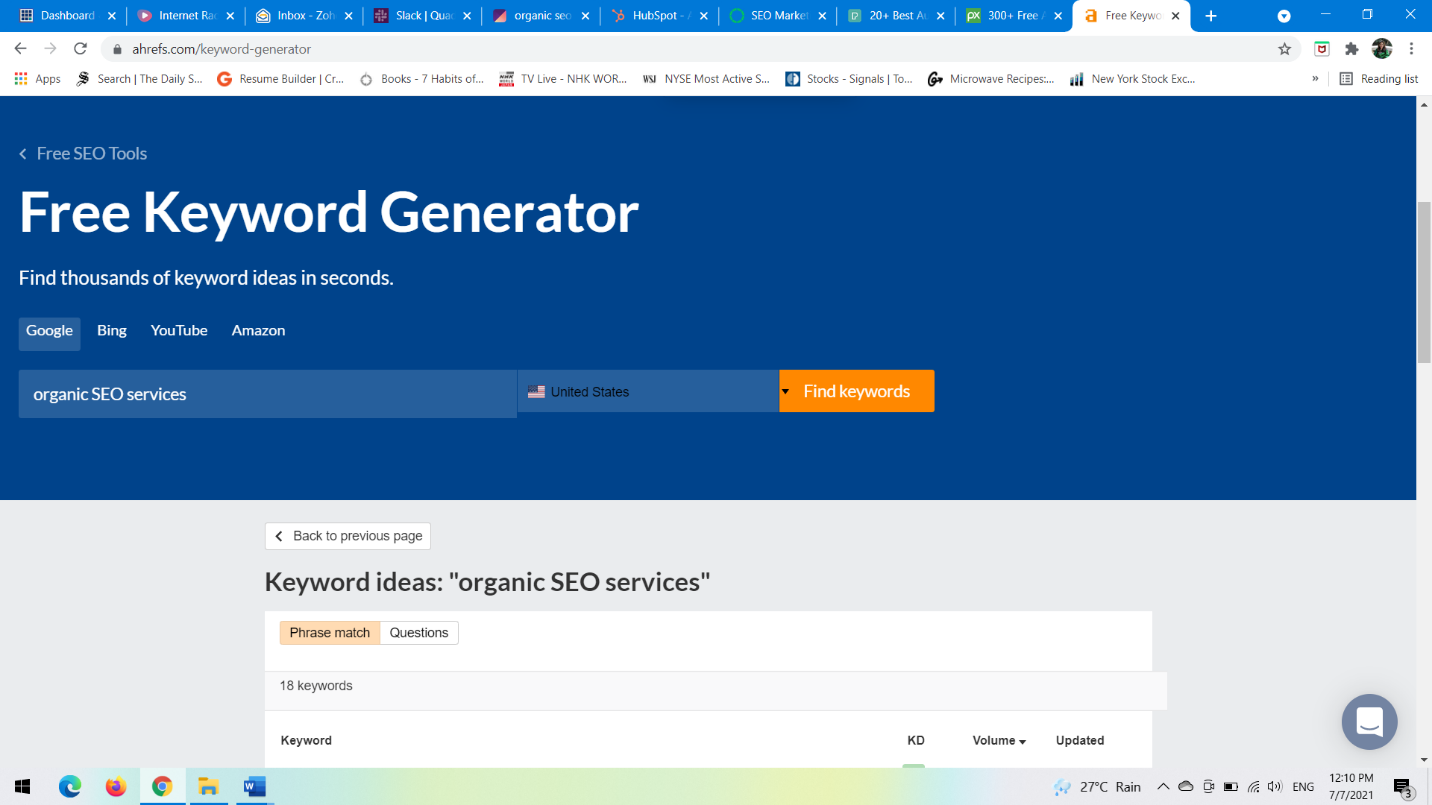
You can identify how high or low is the search volume for specific and related keywords. The trick is to settle on those that have a high monthly search volume but a low competition – the long-tail keywords.
For example, you’re in the real estate business. If you target a short-tail keyword like “suburban villa”, you will face stiff competition. But, aim for a long-tail one like “suburban villa for summer rent under $1000” and bingo! Your page optimization will shoot up your search engine rankings.
2. Sitemaps and Structure

XML sitemaps help your website to be easily crawled by a search engine while the server structure uses SSL to encrypt the data exchanged between the visitor and your site.
These are the essential technical aspects of on-page SEO.
Certain CMSs are also programmed to help you build XML sitemaps.
3. Target Audience and Website Design
Your business targets a specific audience and so your site must cater to their needs. What are the basic requirements?
The site design must be aesthetic, user-friendly, easy to load, responsive, and easy to navigate.
Moreover, there should be enough multimedia like
images
infographics
videos
sprinkled throughout the site. These will keep the visitors hooked and thereby increase the dwell time and reduce the bounce rate.
Make sure that the page load time is less than three seconds to encourage dwell time. You can do this by:
o Compressing images without compromising the resolution.
o Decreasing the number of redirected pages.
o Using the browser cache feature to store information instead of downloading them.
4. Content and Structure
There are thousands of content on the Internet dealing with the same topic as your industry.
To ensure such content gains crawl value, relevance, and authority, organic SEO techniques will make sure the right keywords are spread out naturally throughout the content, especially in the headings and during the first 100 words of the content.
Moreover, the right H1, H2, and subsequent headings need to be applied to structure the content so that it flows according to a sequence, thereby making it easy to scan, skim, or read.

With blocks of text, a reader loses interest and that means a potential customer for your business is lost forever.
To further improve the content, a good organic SEO practice is to use the right images. Moreover, these images should be described in the Image Alt section so that bots and visually impaired persons know exactly what the image shows.
Also, the title tags, catchy headings, and the right length of meta description are crafted to take your site a notch up in Google rankings.
5. Link building
Link building is a two-pronged strategy to up the authority of your site and consequently improve its search engine ranking.
If your site links to other authorities on the subject, that’s external linking. You should thoroughly check the site before providing its link through your content.
Trust only those sites that have a high number of citations and where the contributors can be traced back to check their bio.
The second type of linking is internal linking. Suppose your business is known for providing medical equipment to different hospitals. Your site must have quality content on different types of such equipment. When writing a post on cardiac health, you can build in links that would take the visitor to different pages on your website showcasing various types of cardiac equipment.
Internal linking will improve your search rankings and generate more relevance.

To recap, off-page strategies take place outside your site to raise its ranking.
6. Inbound Linking
This is the backbone of off-page search engine optimization strategies. It’s when other sites provide links to yours in their content.
This is a difficult strategy to implement as your site must provide quality content for others to recommend.
Organic SEO involves reaching out to bloggers and influencers for guest posting. With a robust content marketing plan, you can get influencers to share your content link in their content.
Here are three types of links:
Other forms of off-page strategies include:
7. Guest posting where you write a blog for another website.
8. Leaving a comment on a blog post or any part of the website.
9. Mentioning your brand whether it’s a linked or an unlinked mention.
10. Digital marketing of your website and contents.
11. Getting an influencer to vouch for your site through content marketing.
However, no matter how strong a backlink you build for your site, there’s a catch.
Monitor, Analyze, and Revise

You can’t rest on past laurels even if your website has achieved its goals and ranks high on Google. The SEO strategy will need tweaking as algorithms change. Keep monitoring your website with Google Search Console to analyze the data and revise the strategy for organic SEO to defend your rank.
Final Words
At the end of the day, if you know what you’re writing about on your website and your users find this information valuable, nothing can stop you from ranking high on search engine results pages. With the right on-page and off-page SEO way forward, your business can grow organically, resulting in reaching your goals sooner than later.
We’ve supported more than 1,200 companies worldwide in growing their organic traffic, and you can explore their feedback on our GoodFirms review profile. If you’d like help with organic SEO services, you can book a meeting for a free strategy session with our team.
Organic SEO works by implementing a combination of on-page and off-page strategies to improve the ranking of a website on search engines. Depending on the goals of the website and the roadblocks to reaching those goals, a strategy is chalked out.
For example, if the goal is to increase the organic traffic of a website, the off-page strategy is backlinking. Or, if the goal is to rank high on relevance, the on-page strategy would be to search for keywords and include them in the content.
SEO can be either organic or paid.
With organic SEO, a business needs to apply on-page and off-page strategies so that it naturally comes up on the SERP, preferably on the first page.
When a business opts for paid SEO, it no longer shows as a natural result on the SERP but is mentioned as an ad. The word “Ad” is mentioned beside the URL on search engines to show the searchers that this website has paid to be on top of the SERP.
To make organic SEO, you need to check your website and do an SEO audit to see where the problems lie. Once you know which parameters need to be addressed, you should apply both on-page and off-page SEO strategies.
Although some elements of SEO are no longer applicable, SEO is certainly not dead. Whereas in the past, the number of links on a page dictated its worth, algorithms of search engines have changed to suit the user’s needs. It’s more about the quality of links rather than their quantity.
Paying someone to provide backlinks to increase organic traffic to your site is no longer recommended. The resulting spam content is not appreciated by users and these days, the users of Google and other search engines call the shots.
Organic SEO has become more search engine results-oriented, keeping an eye on the quality and reliability of the information.


Founder, DeepAI
Founder, DeepAI