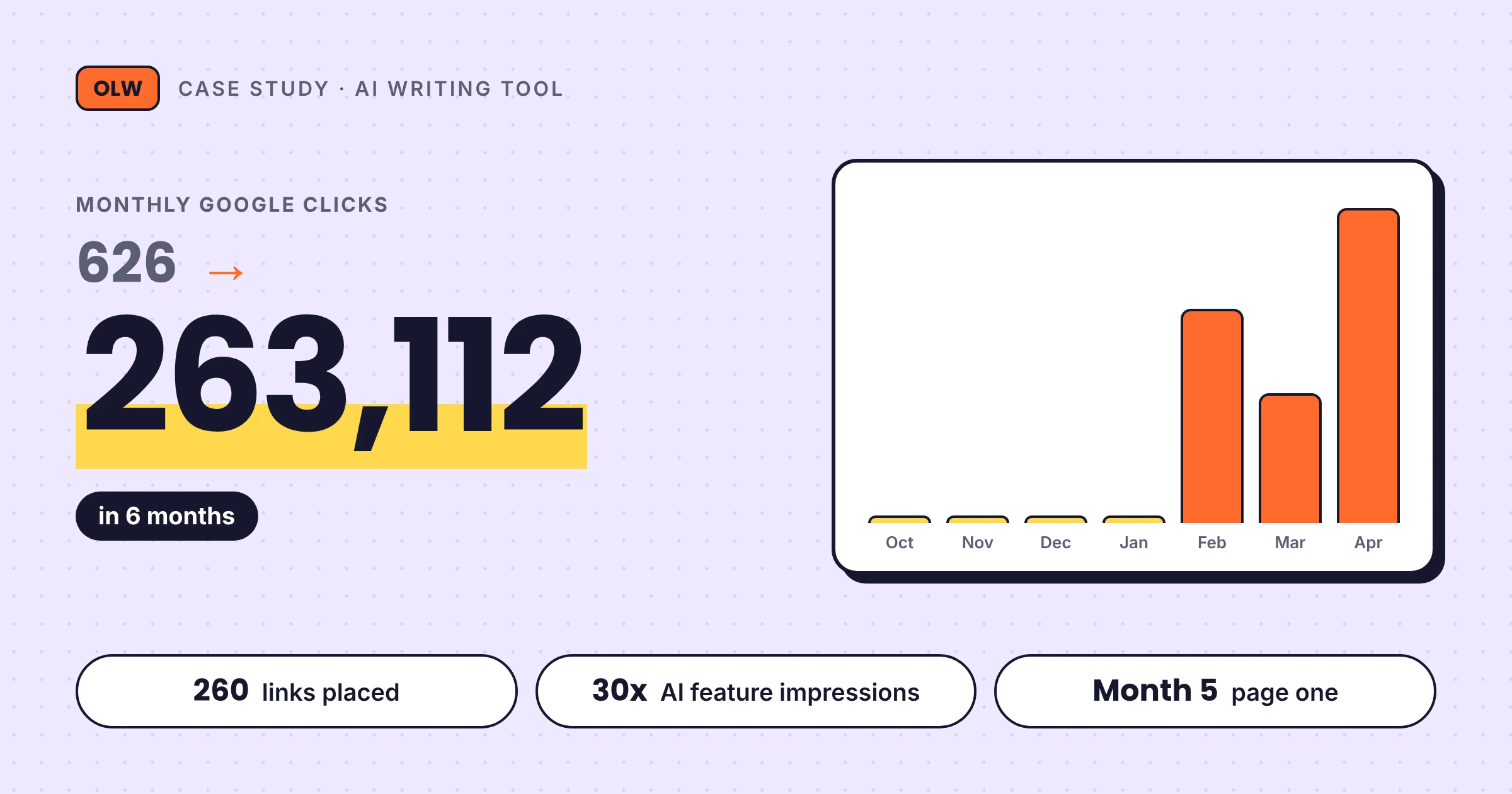
In October 2025, this AI writing tool got 626 clicks from Google. In April 2026, it got 263,112.
Same site. Same product. We planned it, built it to rank and earned the links behind it.
The tool is run by a sister company of ours. That is why we can show you its real Search Console numbers. The name stays private.
Quick answer
OneLittleWeb grew a new AI writing tool from 626 to 263,112 monthly Google clicks between October 2025 and April 2026. We ran keyword research, page design, content and on-page SEO, then placed 260 vetted links in seven months. The target was a head term with about 1 million monthly US searches.
Key takeaways
- The first four months looked like nothing. 94 links in, 2,652 clicks a month. Month five brought 178,511.
- The page was ready before the links arrived. Keyword choice and on-page SEO were done from day one.
- Quality was measurable. The linking sites have a median Domain Rating of 68.
- AI visibility followed search. Impressions in Google’s AI features grew 30x in four months.
The project at a glance
| Client | A portfolio AI writing tool, run by a sister company of OneLittleWeb |
| Market | Global, English |
| Starting point | New domain, live since August 2025. 196 clicks in its first full month. |
| Goal | Page one for the category’s biggest keywords |
| Our role | Strategy to execution: keyword research, site layout, content, on-page SEO, link building, digital PR |
| Engagement | From launch to present |
| Reporting window | October 2025 to April 2026 for search. June to October 2026 for AI visibility. |
| Link volume | 18 a month at the start, 74 a month by April 2026 |
| Data sources | Google Search Console, GA4, Ahrefs, DataforSEO, our link tracker |
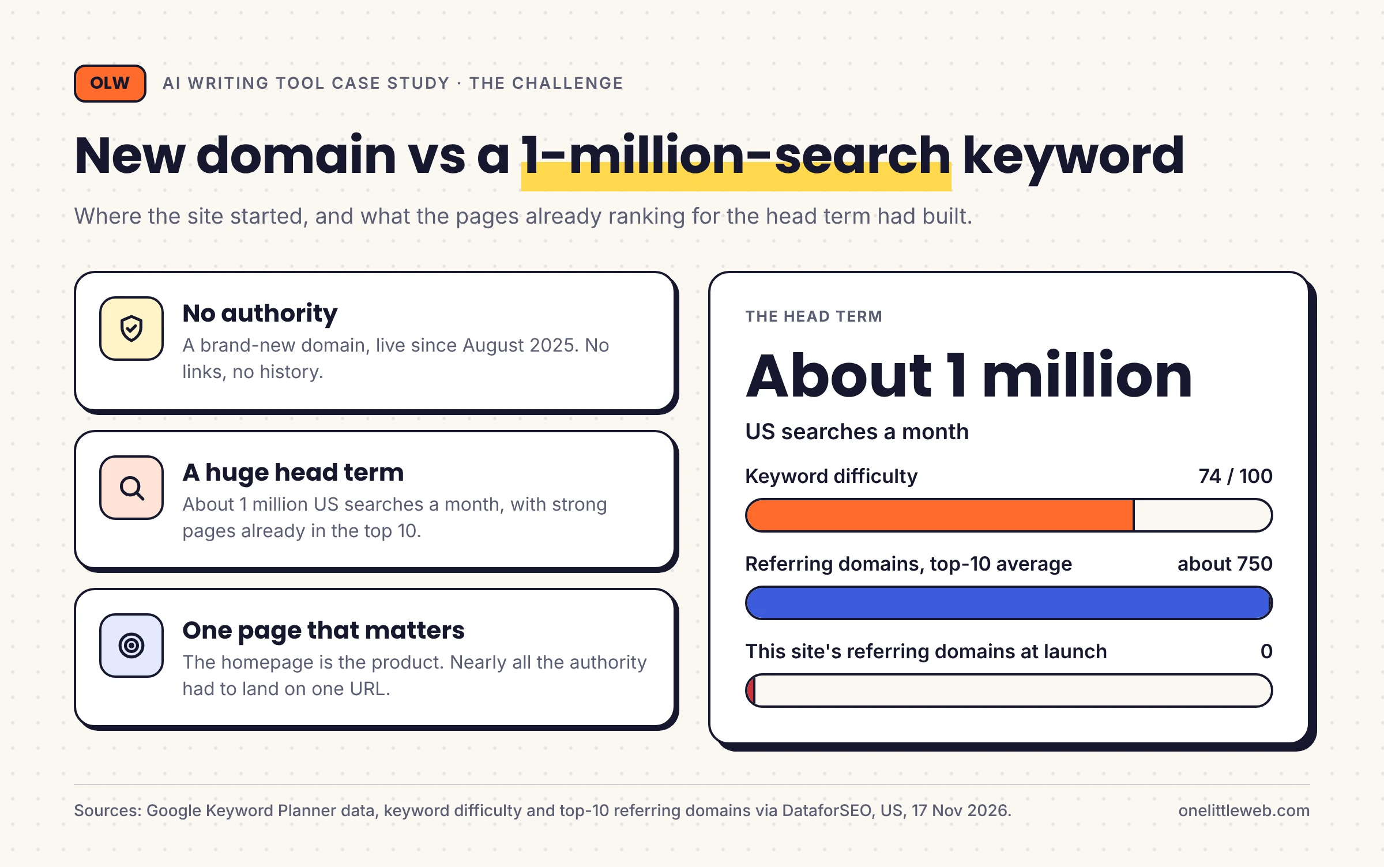
The challenge: a new domain against a 1-million-search keyword
The tool launched in August 2025 on a brand-new domain. In September, its first full month, Google sent it 196 clicks.
Three things stood in the way.
- No authority. A new domain starts with no links and no history.
- A huge head term. The category’s main keyword gets about 1 million US searches a month. Its keyword difficulty is 74 out of 100. Pages in the top 10 average about 750 referring domains.
- One page that matters. The homepage is the product. Nearly all the authority had to land on a single URL.
What we did: strategy first, then authority
We ran the whole program, from the first keyword list to the last link.
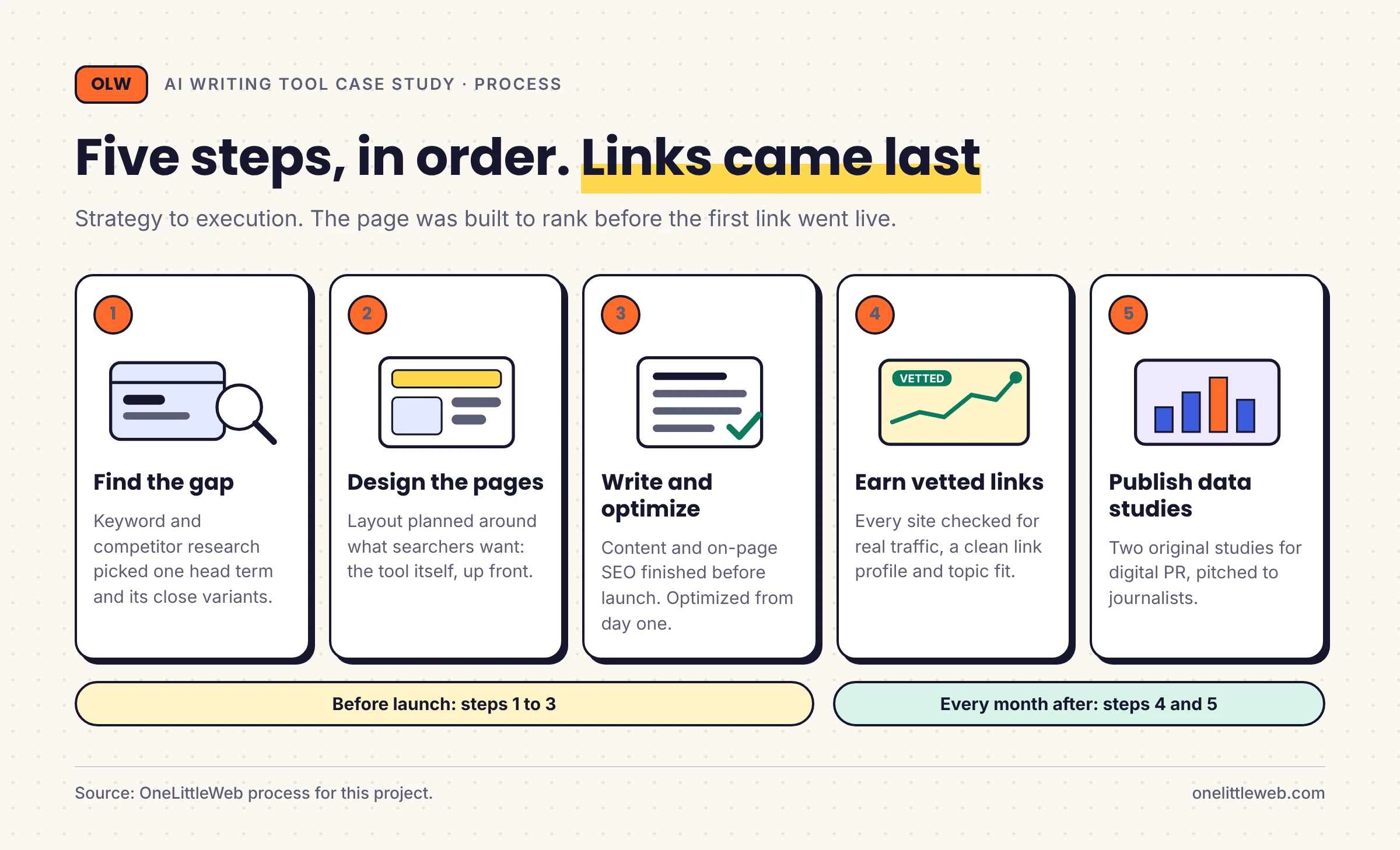
1. We chose the keyword before anything was built
Keyword research pointed to one head term with about 1 million US searches a month. Two close variants add roughly 823,000 and 450,000 more.
That decided everything after it: what the homepage is, what the supporting pages are, and where the links should point.
2. We designed the pages to match the search
We built the product around that search. The homepage is the tool itself. Narrower searches got their own tool pages.
We planned the layout, wrote the content and finished the on-page SEO before launch. When the first link arrived, the page was already built to rank.
3. We earned 260 links in seven months
We started with 18 links in October 2025 and reached 74 a month by April 2026. They came from 252 different sites.
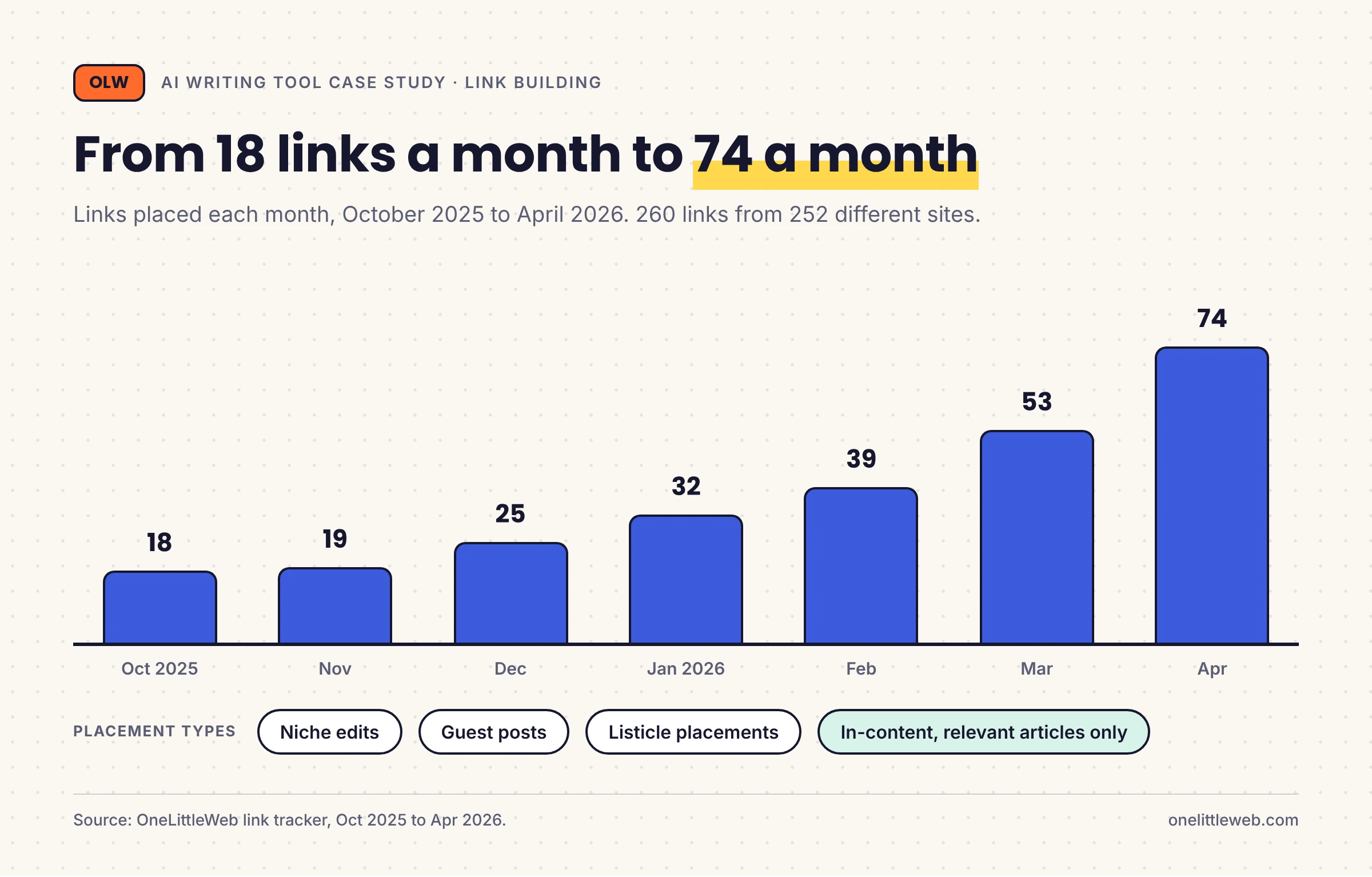
Three placement types: niche edits in existing articles, guest posts, and listicle placements. Every link sits inside the content of a relevant article.
Before a site made the list, we checked its traffic trend, its own link profile and its topic fit.
4. We published two data studies
One ranked countries on AI readiness. The other looked at where billionaires went to university. Both went out to journalists.
The first study has earned links from 59 referring domains. The second has earned 9 (Ahrefs, all time).
How good were the links?
We ran every linking site through Ahrefs. This covers all 439 links placed from October 2025 to November 2026, from 413 different sites.
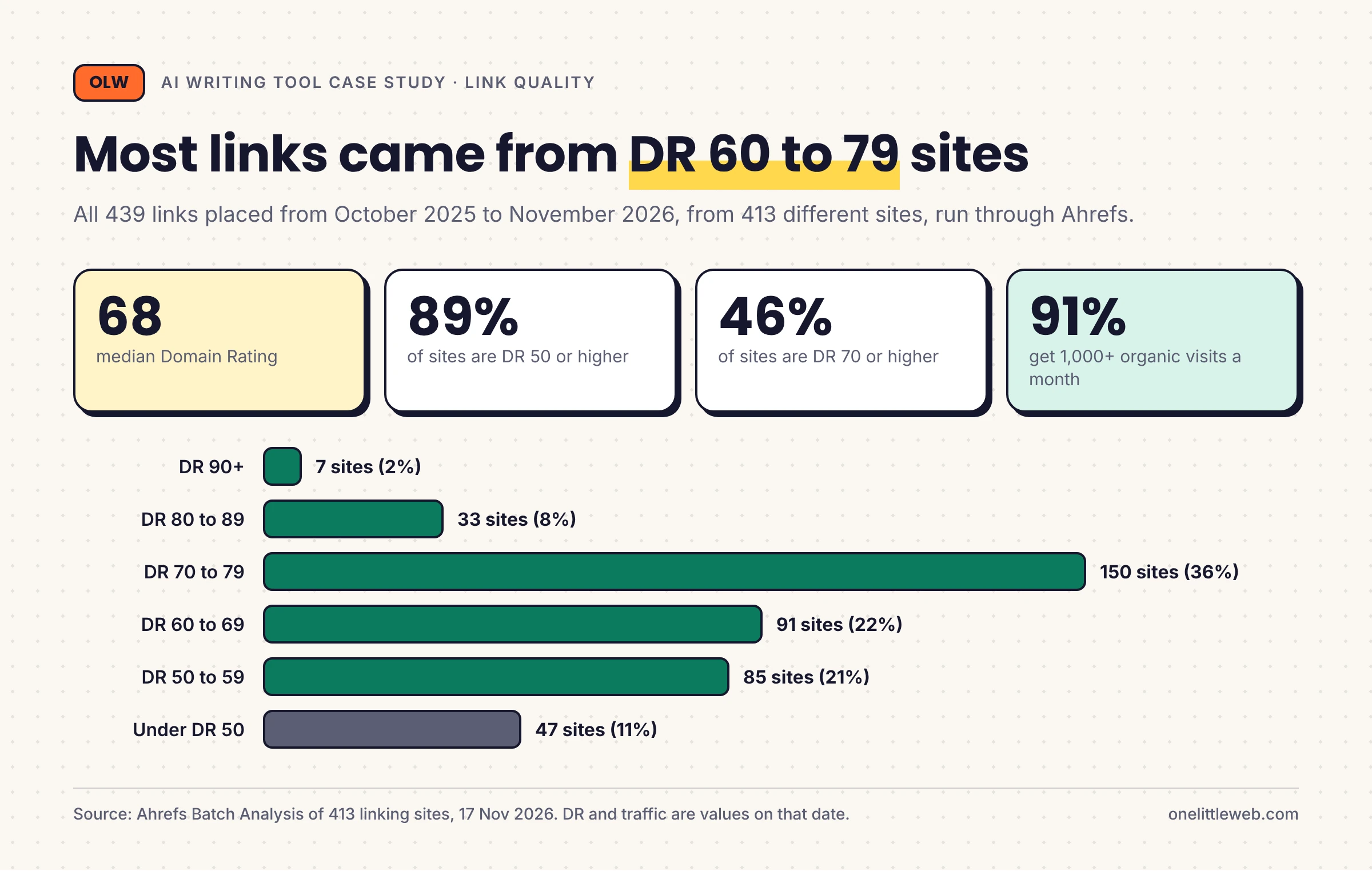
Half of the sites get about 10,000 organic visits a month or more, by Ahrefs’ estimate. 47 of the 413 sites sit below DR 50.
The results: page one in month five
Nothing much happened for four months. Then it all happened at once.
| Month | Clicks | Impressions | Links placed | Running total |
|---|---|---|---|---|
| Oct 2025 | 626 | 13,479 | 18 | 18 |
| Nov 2025 | 1,265 | 26,923 | 19 | 37 |
| Dec 2025 | 2,264 | 37,839 | 25 | 62 |
| Jan 2026 | 2,652 | 67,587 | 32 | 94 |
| Feb 2026 | 178,511 | 4,612,923 | 39 | 133 |
| Mar 2026 | 107,933 | 3,090,740 | 53 | 186 |
| Apr 2026 | 263,112 | 7,581,472 | 74 | 260 |
| Total | 556,363 | 15,430,963 | 260 |
By the end of January we had placed 94 links. Clicks sat at 2,652 a month.
Then the site broke onto page one for the head term.
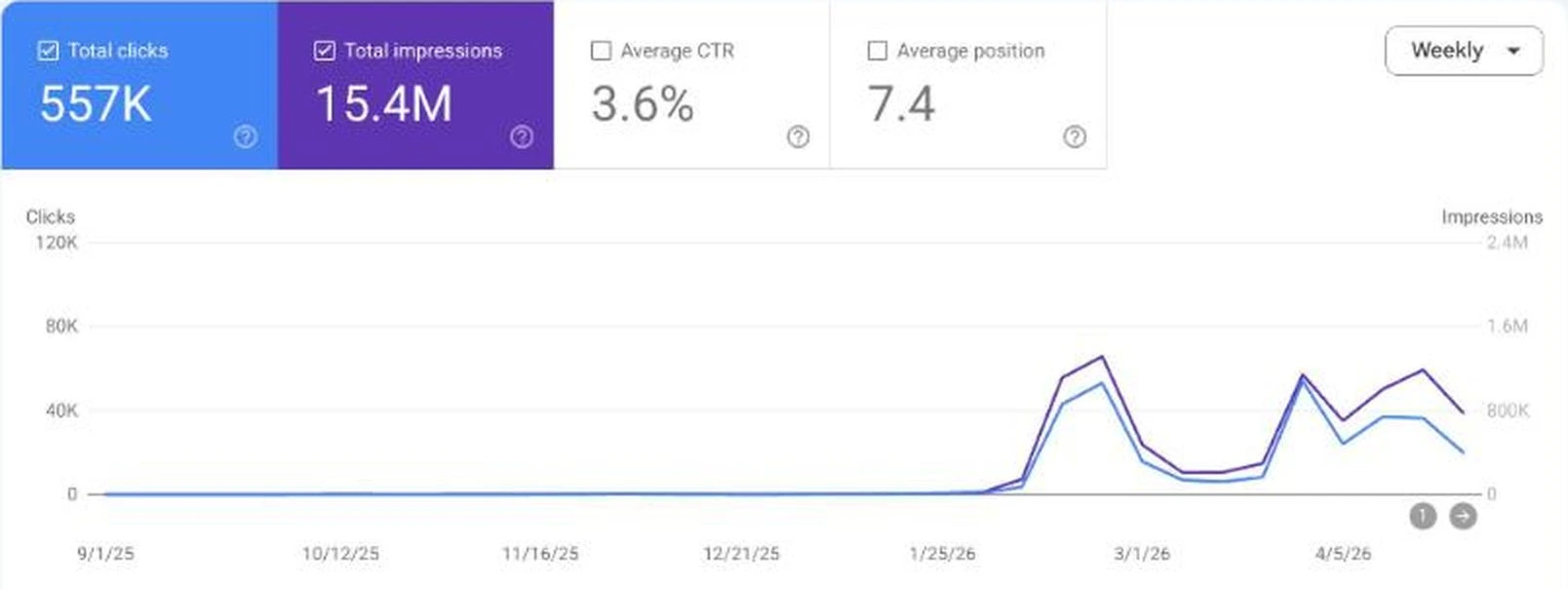
The dip in March
The curve was not smooth. In mid-March, weekly clicks fell to 10,814 as the page moved between page one and page two.
We did not change the plan. We placed 53 links in March and 74 in April. The week of March 29 set a new record: 96,113 clicks.
April closed at 263,112 clicks and 7.58 million impressions.
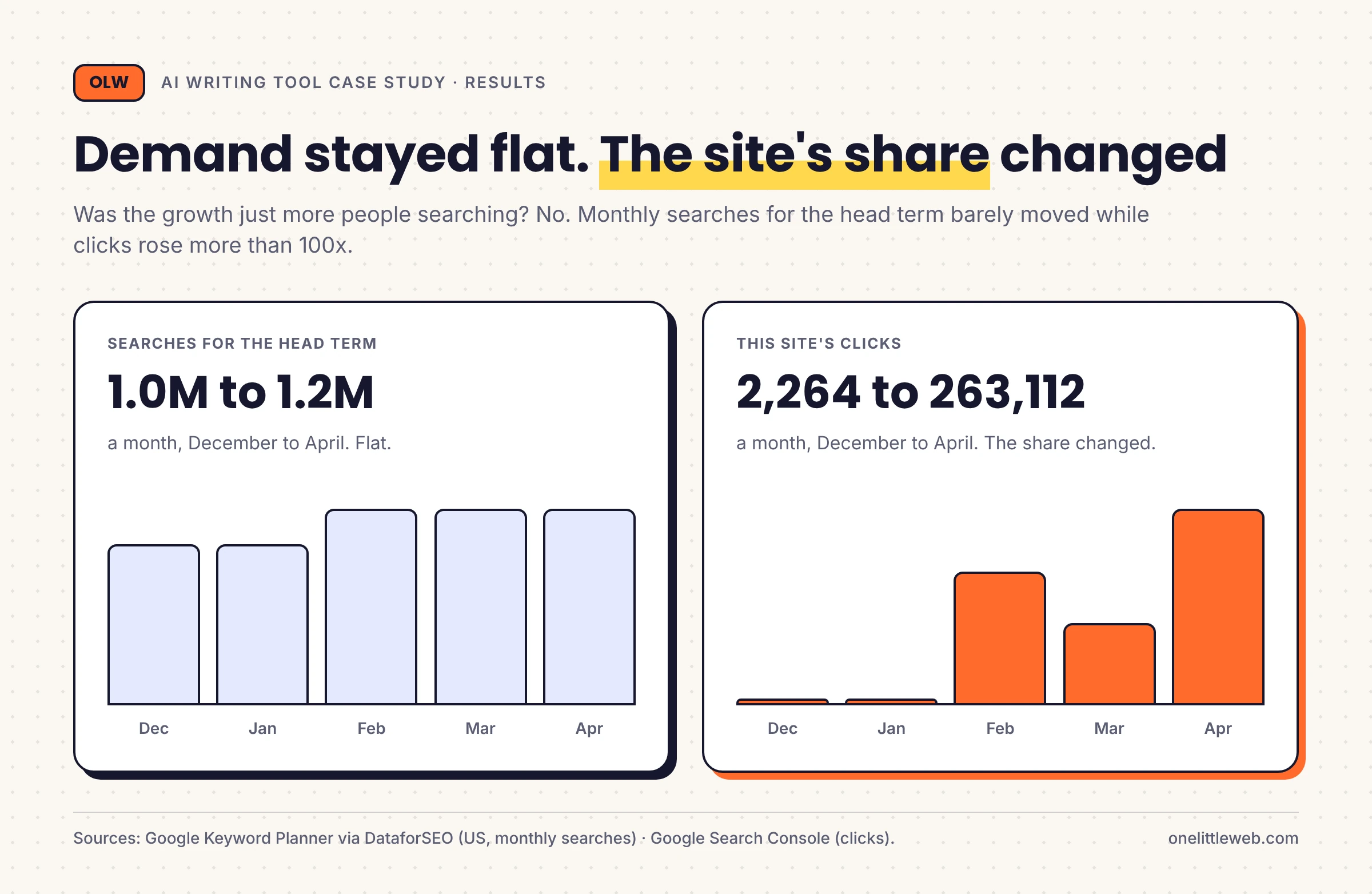
Was it just more people searching?
No. Searches for the head term stayed between 1.0 and 1.2 million a month from December to April. Demand was flat. The site’s share of it was what changed.
What happened next: AI visibility
In May 2026 the product moved to a new brand domain. Clicks dropped after the move and rebuilt to 105,156 in October 2026. We kept building links: 175 more from May to October.
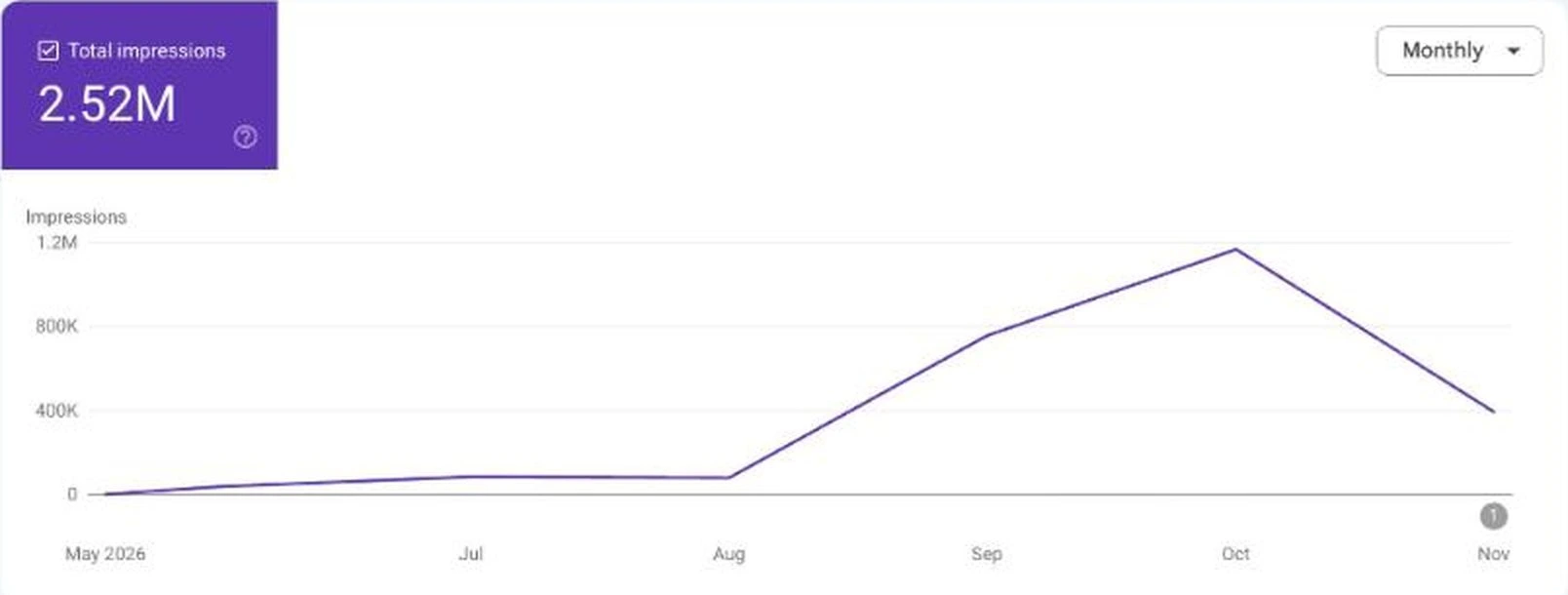
The more interesting number is in Search Console’s new Generative AI report. It counts how often a site appears inside Google’s AI features.
Part of that is seasonal. Searches for the head term rose from about 368,000 in August to about 1 million in September. AI impressions rose more than nine times in the same month, so demand explains only part of the jump.
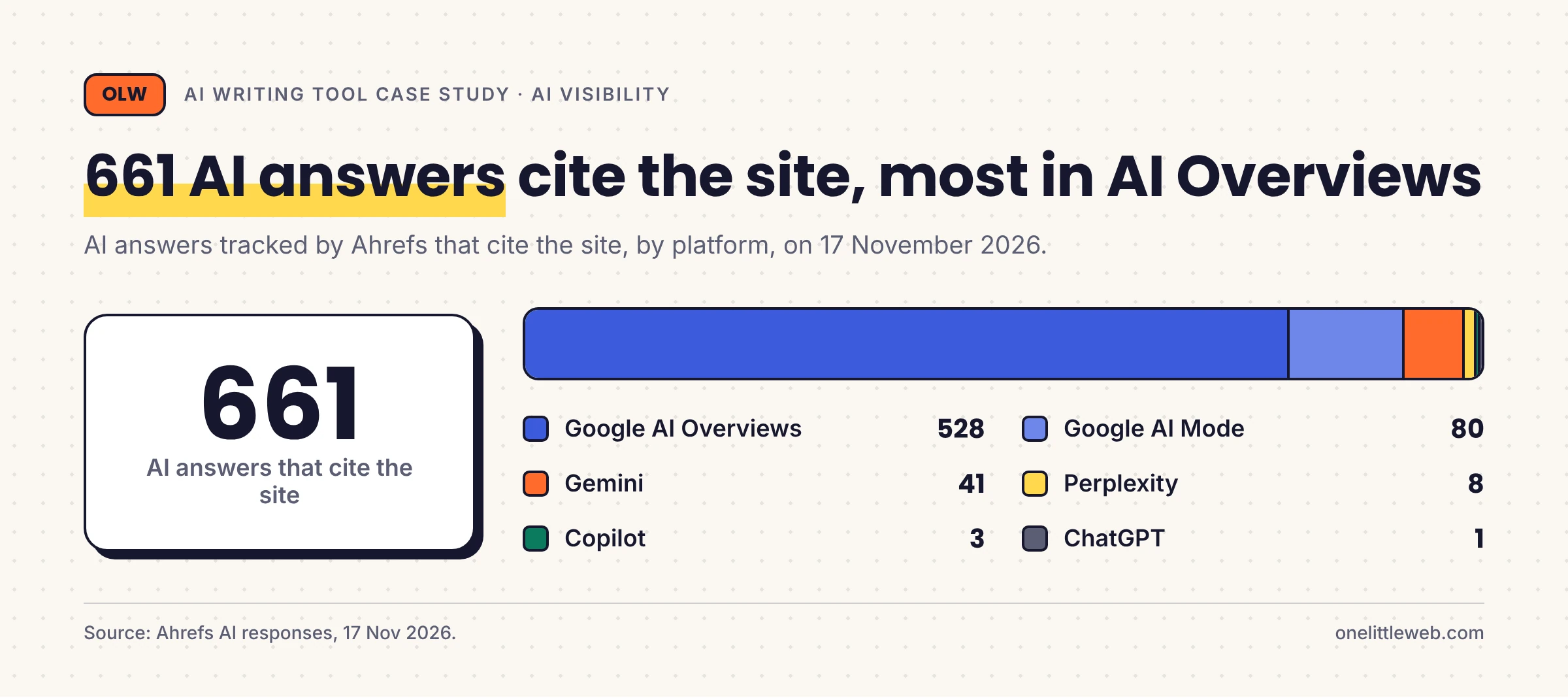
Ahrefs tells the same story from the outside. On 17 November 2026 it tracked 661 AI answers that cite the site. 528 of them are Google AI Overviews.
One honest limit: visits from chatbots like ChatGPT stayed small, about 200 sessions a month in GA4. The growth here is visibility inside Google’s AI features.
The data studies helped too. One study page alone earned 23,683 impressions in AI features.
What made the difference
- Get the page right before you build authority. The keyword, the layout and the on-page SEO were set before launch. Every link pushed a page that was ready for it.
- Authority comes first. Rankings come later. 94 links and four months produced almost no clicks. Month five produced 178,511. Stop at month three and you never see it.
- Keep building through the dip. Big keywords swing. Monthly clicks fell 40% in March. We kept placing links, and April set the record.
- Links that rank you also get you cited. Listicle placements and original data studies give AI systems sources to pull from. Search growth came first. AI visibility followed.
Want this for your site? Our link building services and AI search optimization services follow the same process. For the AI side, start with our guide to AI search optimization.
Questions people ask about this case study
How long did it take to see results?
Four months of almost no movement, then a breakout in month five. Clicks went from 2,652 in January 2026 to 178,511 in February.
How many links did it take?
The breakout came in February 2026. By the end of that month we had placed 133 links. By the April peak the total was 260, from 252 different sites.
What kind of links were they?
Niche edits in existing articles, guest posts and listicle placements, all inside the content of relevant articles. The linking sites have a median Domain Rating of 68, and 89% are DR 50 or higher (Ahrefs, 17 November 2026).
Did links alone do it?
No. The keyword was chosen first, and the pages were designed and optimized for it before launch. Links supplied the authority a new domain lacks.
Did the growth carry over to AI answers?
Yes, inside Google’s AI features. Impressions there grew 30x from June to October 2026, and Ahrefs tracked 661 AI answers citing the site. Visits from chatbots like ChatGPT stayed small, about 200 sessions a month.
Why is the client not named?
The tool is run by a sister company of ours and stays private. All figures come from its own Search Console, GA4 and our link tracker.
Data and method
- Clicks and impressions: Google Search Console, web search, monthly and weekly totals for the whole site.
- Links: OneLittleWeb link tracker, counted by the month each link went live.
- Link quality: Ahrefs Batch Analysis of the 413 linking sites, 17 November 2026. Domain Rating and traffic are values on that date, and traffic is an Ahrefs estimate.
- Search volume, keyword difficulty and competitor link counts: Google Keyword Planner data, difficulty score and top-10 referring domain average via DataforSEO, United States, checked 17 November 2026.
- AI visibility: Search Console Generative AI features report (beta) and Ahrefs AI responses. Chatbot visits from GA4.
- Two domains: October 2025 to April 2026 figures are from the original domain. June to October 2026 figures are from the new brand domain. We do not add the two together.
- What else was running: the site ran small paid search campaigns from September 2026 (GA4). Those visits are not in the Search Console figures.
- Relationship: the tool is run by a sister company of OneLittleWeb.
- Withheld: the site name, exact keywords, study titles and the names of linking sites.